
Carp Rod: Two-Piece, Three-Piece, or Telescopic? Construction Comparison
A two-piece carp rod is worth considering first if you can comfortably transport its long sections. Three-piece, travel, or telescopic designs help reduce luggage size, but each of these solutions requires a slightly different approach to packing and preparing your gear. The choice should be based on the actual folded dimensions, the quality of the specific rod, and the conditions in which you will be using it.
Add Rockworld-carpshop.com to your preferred sources in Google!
Table of contents
- Two-piece or three-piece carp rod — what are the practical differences?
- Does more sections mean worse rod action?
- Telescopic rod vs telescopic butt — what’s the difference?
- When is it worth choosing a travel carp rod?
- How to check transport length and pick the right rod sleeve?
- What to watch out for when assembling and disassembling your rod?
- Which rod construction suits your fishing trips best?
- Frequently asked questions about carp rod constructions.
Two-piece or three-piece carp rod — what are the practical differences?
A two-piece rod consists of two detachable sections with one connection between them. A three-piece model has three sections and two connections. The most obvious difference you’ll notice when packing: rods with the same working length can take up significantly different amounts of space when folded.
Two-piece rod — when is it worth choosing?
This is my primary choice, especially for casting fishing. If transport is not an issue, I first look for a suitable model among two-piece rods.
At the beginning of my carp fishing journey, I used three-piece rods. After buying my first two-piece rod, I felt a clear improvement in the blank’s action, especially during casting. This experience influenced my later equipment choices.
However, it’s important to separate comparisons of used models from judging all rods on the market. The number of sections alone does not tell how well the blank is designed or how the rod will perform with your setup.
Another advantage of two-piece rods is simple assembly. You connect two parts, align the guides in a straight line, and manage one joint. The limitation remains the length of the transported parts — for 12 ft models, you often need about 190 cm of space plus room for the rod sleeve.
If such transport is convenient for you, check out two-piece carp rods.
Three-piece rod — when do shorter sections matter?
Consider three-piece rods when a long rod sleeve complicates travel. This applies to small cars, trips with passengers and lots of luggage, and also public transport commutes.
Shorter sections can also make storing gear at home and reaching your fishing spot easier. You don’t have to compromise on the working length that suits your fishing style.
A three-piece 12 ft rod can solve transport issues without switching to a shorter carp rod. Before buying, compare its actual action and build quality with alternatives in a similar budget.
You’ll find such designs in the three-piece carp rods category.
Does more sections mean worse rod action?
Additional joints affect the blank’s construction but don’t automatically make the rod slower, weaker, or less precise.
A three-piece rod isn’t simply designed by splitting a two-piece model into shorter sections. The extra joint and the way loads transfer between sections must be considered.
Depending on the design, one section slides over another or connects via an internal spigot. The blank’s structure changes around the joint. The designer must consider diameter matching, insertion length, and necessary reinforcements. This affects local stiffness and weight distribution.
The effect depends on the entire design. Materials, blank geometry, joint placement, and reinforcement can matter more than the number of sections alone.
In the models I’ve used, the two-piece rods felt noticeably better. However, I wouldn’t take this as proof that every three-piece rod must vibrate longer after a cast.
When comparing, pay attention to:
- smoothness of the blank’s action under load;
- rod behavior after casting;
- fit and stability of the joints;
- comfort of handling the specific model.
The best comparison is between rods of similar length, bending curve, and purpose. Comparing a basic three-piece model with an advanced two-piece rod will show differences between those products but won’t clarify which are due to the number of joints.
Telescopic rod vs. rod with telescopic butt — what’s the difference?
In a full telescopic rod, the blank’s sections slide one inside another. In a rod with a telescopic butt, the lower part shortens, while the upper section usually remains a separate spigot section.
This distinction is important because similar transport length can result from very different constructions.
Classic telescopic rod
A full telescopic design reduces luggage length without breaking the rod into separate parts. It can be a solution for anglers needing gear that fits into a small space.
However, this design requires many section joints. The blank’s division also affects guide placement options. When assembling, you need to check correct extension and alignment of sections.
Personally, I don’t choose full telescopic rods as my first option when casting performance and blank action matter most. Their biggest advantage is compact transport size.
That said, not every telescopic rod casts poorly or is unsuitable for effective fishing. Nor can you assign a single vibration damping speed to the entire group. Each model and load must be evaluated individually.
If compact packing is crucial for you, compare telescopic carp rods, paying attention also to blank action and ease of assembly.
Rod with telescopic butt
In this design, the shortening mechanism is in the lower part of the rod. The upper section usually remains one piece and connects to the butt via a spigot. This reduces size without telescoping the entire length.
This solution is useful for mobile fishing, frequent spot changes, and transporting ready rigs in shorter rod sleeves. You’ll mainly find it in shorter carp rods but also in longer models.
The telescopic butt itself doesn’t determine the rod’s action or purpose. Don’t assume every such design is soft or only suitable for close-range fishing.
For baitboat fishing and playing fish from a pontoon, I still prefer classic two-piece rods. In models I like, I appreciate the fuller, more “meaty” blank action. However, if a shorter rod sleeve is key, carp rods with telescopic butt are worth considering.
Examples of specific models for pontoon work can also be found in the ranking of carp rods for baitboat fishing.
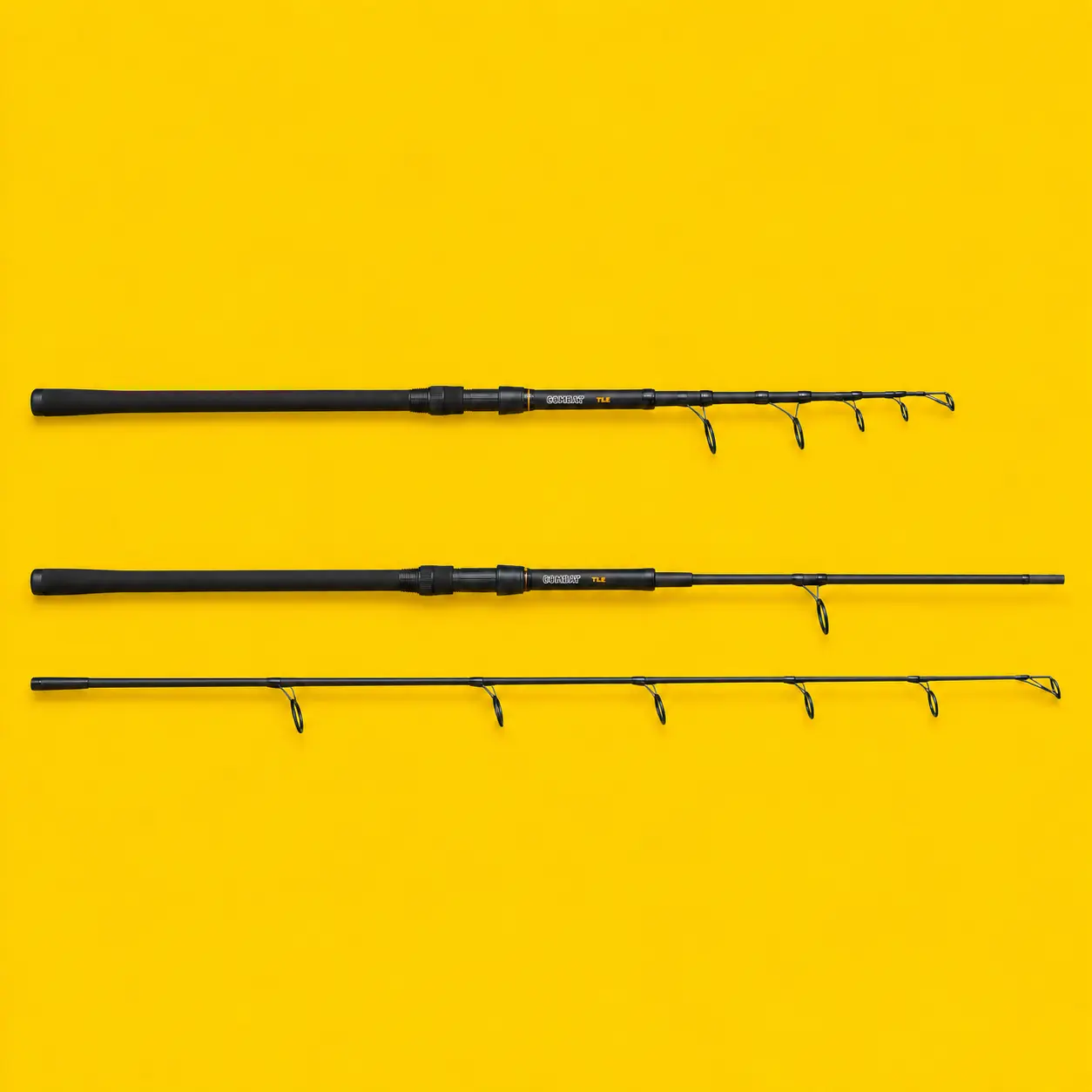
Caption: In a full telescopic rod, the blank’s sections slide inside each other. In a telescopic butt design, the lower part shortens while the upper section remains a separate spigot piece.
When is it worth choosing a travel carp rod?
Travel rods allow you to combine compact luggage size with the needed working length. Among them are four- and five-piece constructions that can reach typical carp rod length when assembled.
Consider them for trips where fishing gear must fit alongside other luggage. They can also ease transport by public transport or storage in limited space.
A higher number of separate parts means more joints to assemble and check. You also need to protect all parts inside the rod sleeve.
The term “travel” describes transport purpose but doesn’t indicate a single construction type. Check if the chosen model has several spigot sections, a telescopic part, or another shortening solution.
In the travel carp rods category, primarily compare the length of the longest section, the protected set’s dimensions, and parameters needed for fishing.
How to check transport length and choose the right rod sleeve?
Check the transport length in the specification of the specific variant. Dividing the working length by the number of sections only gives an approximation, as it doesn’t consider connection methods or differences between sections.
I learned this when fishing with a small car. Two-piece 12 ft rods, folding to about 190 cm, caused problems fitting inside. Choosing a good rod alone didn’t solve transport space issues.
How much space do specific constructions take?
The table below shows declared transport lengths of selected variants. It serves to compare sizes — not to judge quality or casting ability.
| Model and variant | Construction | Transport length |
|---|---|---|
| Shimano Tribal TX-1B 12 ft / 3.00 lb | Two-piece | 187 cm |
| Shimano Tribal TX-1B 12 ft / 3.00 lb, 3 sec. version | Three-piece | 127 cm |
| Mivardi M-Traveller 360H 12 ft / 3.00 lb | Full telescopic, 6 sections | 102 cm |
| Sportex Touron Carp 12 ft / 3.00 lb | Travel, 4 parts | 97 cm |
| Sportex Competition CS-5 Stalker 10 ft / 3.00 lb | Classic two-piece | 157 cm |
| Sportex Competition CS-5 Breakout 10 ft / 3.00 lb | With telescopic butt | 127 cm |
Between the two Shimano 12 ft variants, the difference is 60 cm. This can decide whether you transport the gear in the trunk or across the entire car interior.
The last two examples show the difference between classic construction and telescopic butt at 10 ft length: 157 cm versus 127 cm.
Don’t treat these values as a standard for the whole group. Another model with the same length marking may take a different amount of space, but these values will be roughly similar.
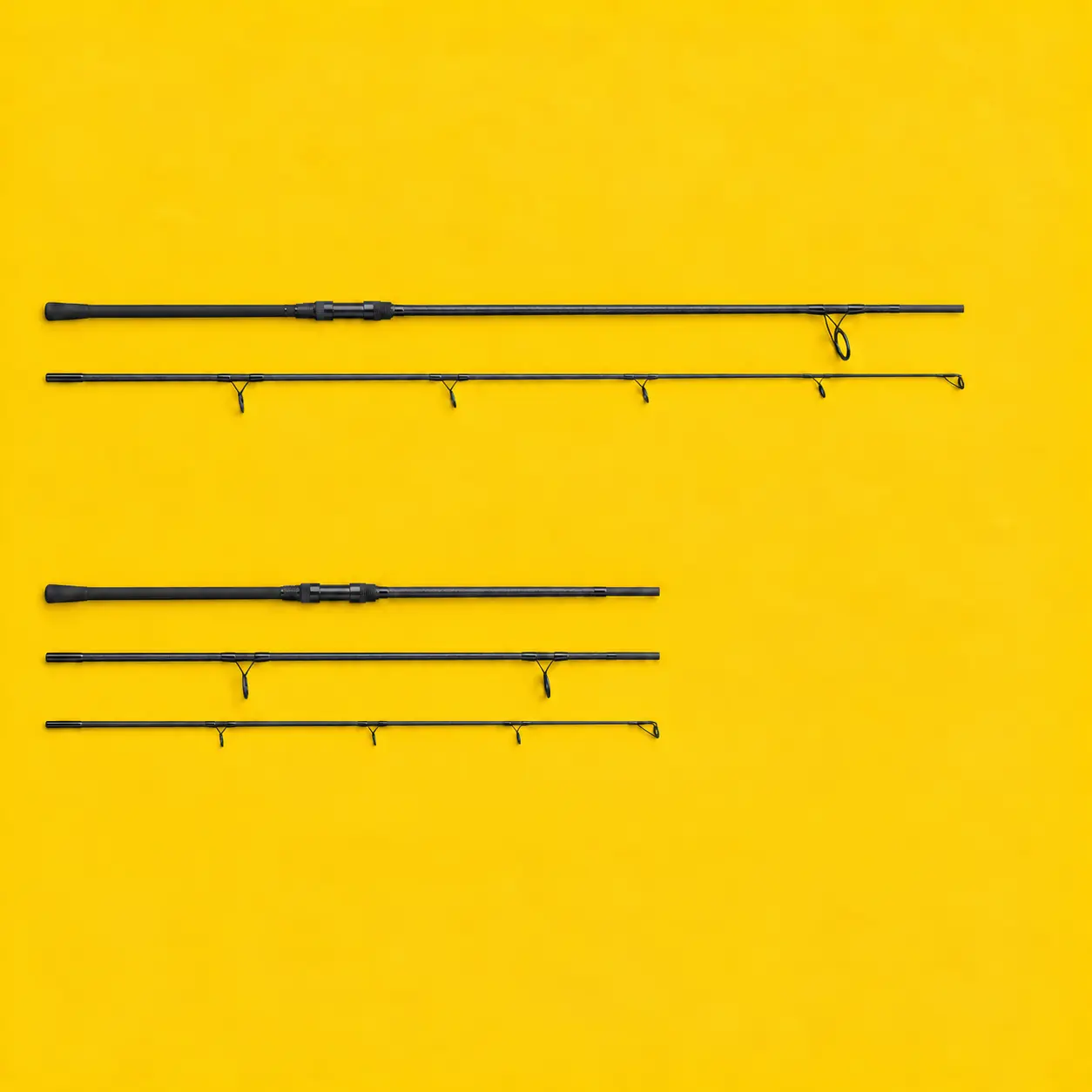
Caption: The same working length (including 12 ft cases) doesn’t mean the same folded dimensions. Before buying, compare the length of the longest sections and space needed for the rod sleeve.
What to check besides the rod length?
Measure the space in your car as you actually travel. Consider passengers, other gear, and the ability to insert and remove the rod sleeve.
Also check:
- usable length of the rod sleeve — the “12 ft” label alone is not enough;
- space for guides, especially the large first guide;
- room for the reel mounted on the rod;
- protection of the tip and section ends;
- possibility to store the set without stressing the blanks.
The rod sleeve shouldn’t close only after pressing the guides or bending the rod.
If you’re still deciding on the needed rod length for fishing, use the guide how to choose the right carp rod length. Then look for a construction that allows convenient transport.
What to pay attention to when assembling and disassembling the rod?
A properly designed joint requires correct assembly. A section not fully inserted, dirt, or forcing parts together can cause damage.
Before fishing:
- Check the cleanliness of the joints. Remove sand and dirt before inserting sections.
- Inspect section ends. Cracks, delamination, or visible damage require checking before loading the rod.
- Assemble the rod according to instructions. Align guides in a straight line and check section seating.
- Check joint stability. Sections should not rotate or shift during normal use.
For telescopic rods, also ensure correct extension and seating of each section. Don’t assume you can fish with a partially collapsed rod — this must be allowed by design and manufacturer recommendations.
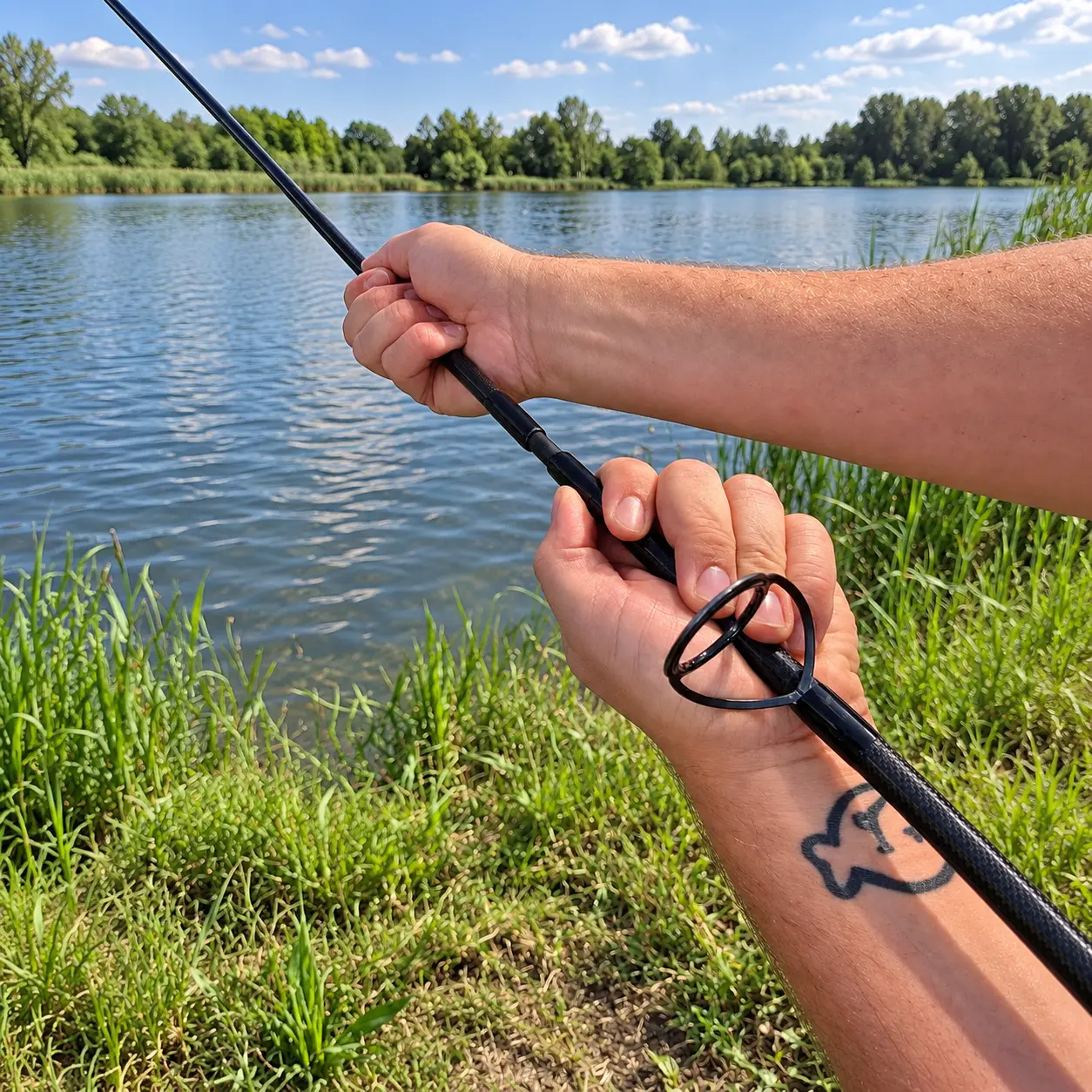
Caption: When connecting and separating sections, hold the blank close to the joint. Guides should not be used as handles.
What to do if a joint gets stuck?
Don’t try to separate a stuck joint with a sudden jerk. In my carp rods, this happened rarely, but it’s good to know how to proceed to avoid damaging the blank or guides when disassembling.
First, grip both parts as close as possible to the joint. Try to gently pull them apart, combining a slight twisting motion in opposite directions with steady pulling.
If you can’t get a good grip alone, ask someone for help:
- One person holds one section with both hands near the joint, the other does the same with the adjacent section.
- Both gently pull the parts in opposite directions along the rod’s axis, while each applies a twisting motion in opposite directions. The movement should be calm and coordinated.
The helper’s role is to improve grip and control, not to apply more force. Don’t grab guides or use them as levers. Holding the blank far from the joint increases the risk of uncontrolled twisting or bending of the sections.
If a third person is needed, they can support the rod and keep sections aligned. They may also try very slight circular motions on the stuck joint — but extreme caution is required.
Before each session, check joint cleanliness — sand and dirt can hinder proper seating and later separation of sections.
Which construction to choose for your travel style?
Start by determining how much space you can allocate for a protected rod set, then compare models that meet this condition.
| Your situation | Construction to consider | What to check before purchase? |
|---|---|---|
| You can easily transport a long rod sleeve and prioritize rod action during casting | Two-piece | Behavior of the specific blank and convenience of transporting its long sections |
| You need full working length but two-piece sections don’t fit comfortably in your luggage | Three-piece | Actual transport length, rod action, and fit of both joints |
| You often move with a small setup and want a shorter rod sleeve | With telescopic butt | Dimensions of the set with reel and ease of extending the lower part |
| Your priority is a short package without breaking the rod into separate sections | Full telescopic | Quality of section seating, action of the specific model, and guide protection |
| Gear must fit into a strictly limited luggage space | Travel, multi-piece | Length of the longest section and external dimensions of the tube or rod sleeve |
If transport allows, I stick to two-piece rods. But when their size complicates every trip, it’s worth comparing more compact constructions. A good rod should fit both your fishing style and your actual way of getting to the water.
The full sequence of rod selection — from fishing method to parameters and build quality — is available in the guide how to choose a carp rod.