
What length carp rod should you choose? 10, 12, or 13 ft?
The 12 ft carp rod is a good starting point for bank fishing, both for casting and for presenting rigs with a bait boat. Models of 9–10 ft are worth considering primarily for playing fish from a pontoon and fishing that requires easy maneuvering with a shorter rod, while 13 ft rods are suited for longer casts if you can make use of the extra length. The choice should be based on the fishing spot conditions, the way you play the fish, and the comfort of handling the gear.
Add Rockworld-carpshop.com to your preferred sources in Google!
Table of contents
- Carp Rod Length in Feet and Meters — How to Read the Markings?
- 10 ft Carp Rod — When Does a Shorter Model Make Fishing Easier?
- 12 ft Carp Rod — When Is It a Good Starting Point?
- 13 ft Carp Rod — When Does Extra Length Really Help?
- How to Match Rod Length to Your Spot and Fighting from Shore or Boat?
- Should Height and Casting Technique Influence Your Length Choice?
- 10, 12 or 13 ft? Comparison and Example Situations by the Water.
- Frequently Asked Questions About Carp Rod Length.
Carp Rod Length in Feet and Meters — How to Read the Markings?
The ft marking indicates the length expressed in feet. One foot is exactly 30.48 cm. For a rod, this refers to the length of the assembled rod, not the size when packed in its case.
| Length in Feet | Conversion to Meters, Rounded |
|---|---|
| 6 ft | 1.83 m |
| 8 ft | 2.44 m |
| 9 ft | 2.74 m |
| 10 ft | 3.05 m |
| 12 ft | 3.66 m |
| 13 ft | 3.96 m |
The table shows unit conversions. Check the actual length of a specific model in its specifications. The notations 3 m, 3.60 m, or 3.90 m are not exact equivalents of 10, 12, and 13 ft, although they are sometimes used as simplified references for these length classes.
There is about a 61 cm difference between 10 and 12 ft, and about 30 cm between 12 and 13 ft. Such a margin can affect the ease of managing the line over shoreline vegetation, landing fish, or maneuvering the rod under branches while fishing.
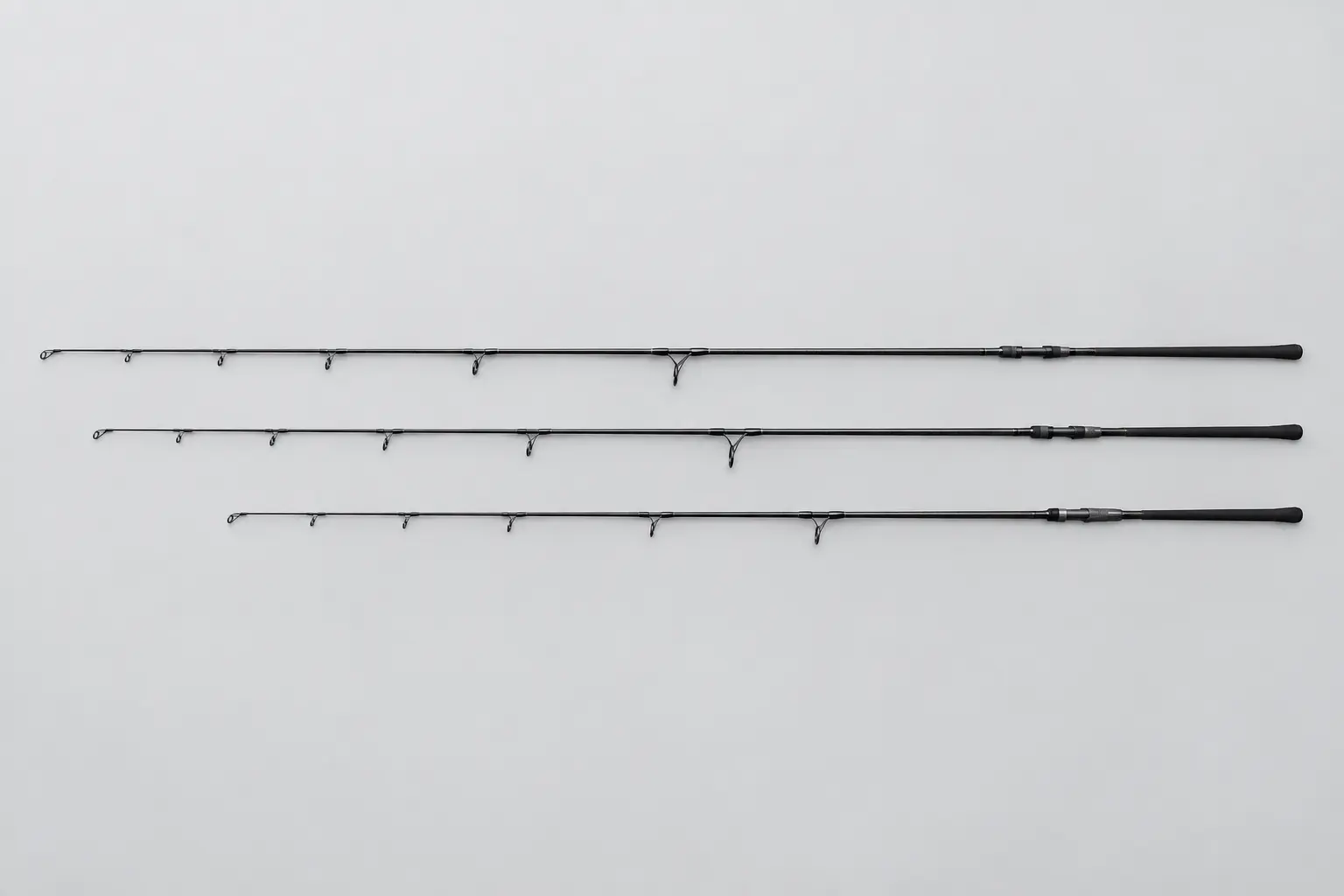
Caption: There is about a 61 cm difference between 10 and 12 ft, and about 30 cm between 12 and 13 ft.
10 ft Carp Rod — When Does a Shorter Model Make Fishing Easier?
A 10 ft rod works well where you need handy gear and have limited space to operate the blank. This especially applies to baitboat delivery and landing fish from a pontoon, moving actively between spots, and parts of waters with low-hanging branches when fishing by casting.
A shorter rod makes it easier to change the direction of the fish in tight spaces. On a small pontoon deck, it’s also more convenient to position it relative to the landing net and set it down when needed.
A 10 ft length does not exclude casting fishing. With a properly chosen model, suitable rig, and technique, you can achieve distances around 80-100 m. However, this is not a result you can expect from every rod marked as 10 ft. A short rod designed for close-range fishing and a stronger casting version can behave quite differently.
When Is It Worth Going Below 10 ft?
For stalking, i.e., actively searching for fish and frequently changing spots, starting points can be models 8–10 ft. In exceptionally tight spots, especially when fishing close to the shore under branches, even a 6 ft rod can be useful.
However, such length limits the range of tip operation. Before choosing a very short model, also check if you will be able to perform the fight and land the fish from your available spot — tall reeds or overhanging tree branches can effectively prevent this.
12 ft Carp Rod — When Is It a Good Starting Point?
Consider 12 ft length when most of your sessions are from the shore and you need a rod for various situations. It allows comfortable casting at many spots, and when delivering rigs by baitboat, it provides a greater range of tip operation than a 10 ft model.
When talking with a customer who delivers rigs by baitboat and fights fish from the shore, I usually start with 12 ft. The extra length can help guide the line over shoreline vegetation or further from the edge of the spot.
The 12 ft model is not reserved only for short and medium casts. Versions designed for longer distances can also offer very good capabilities. The outcome also depends on the blank construction, rig, and casting technique.
If you want to combine casting fishing with baitboat delivery and shore fighting, check out the ranking of universal carp rods. It will help you compare specific models and their applications.
13 ft Carp Rod — When Does Extra Length Really Help?
Consider a 13 ft rod primarily if you regularly fish by casting at longer distances and have conditions to utilize a longer blank. You need adequate space at your spot and movement that allows effectively loading the rod during the cast.
The extra 30 cm does not automatically guarantee greater range but can naturally help. If you operate a longer model less smoothly or find it harder to maintain consistent motion, a more comfortable 12 ft rod might give better results.
How Do I Choose Between 12 and 13 ft During My Own Sessions?
I use both lengths for casting fishing. In good weather conditions, without strong crosswind or wind blowing in my face, I effectively deliver rigs about 120 m with a 12 ft rod with a 3.50 lb bending curve. When planning to fish beyond 130 m, I reach for a 13 ft model.
This is how I match my gear to my waters and techniques. It does not mean that 120 m is the limit for a 12 ft rod or that beyond 130 m everyone needs a 13 ft rod.
It’s also worth distinguishing markings: lb indicates the bending curve, not the casting weight in grams. Length combined with lb value alone is still insufficient to assign a specific casting range to a rod.
Will a Longer Rod Be More Accurate in Windy Conditions?
When regularly fishing from the shore in tougher conditions, I would rather choose a 12 ft model than 10 ft. However, I don’t treat extra length as a guarantee of more accurate casts.
Repeatability also depends on blank action, rig setup, technique, and wind direction and strength. Evaluate how often you can place the rig in the chosen spot, not just the longest single cast.
To compare specific 12 and 13 ft models, check out the ranking of carp rods for long-distance casting.
How to Match Rod Length to the Spot and Fighting from Shore or Pontoon?
When choosing length, determine two things separately: how you deliver the rig and from where you will fight the fish. Simply stating “I fish by delivery” is not enough to answer.
Baitboat Delivery and Fighting from Shore
A baitboat solves the issue of rig delivery but does not change the conditions of fighting the fish from the spot.
If you need to guide the line over reeds, move it away from a shoreline obstacle, or operate the tip further from the shore edge, 12 ft may be a more comfortable choice than 10 ft. On an open spot without such needs, a shorter model can also work well.
Delivery and Fighting from a Pontoon
If after a bite you go out to the fish and fight it from a pontoon, usually the convenience of 9–10 ft models offers more benefits. They are easier to operate in limited space and position the fish for landing near the pontoon side.
A 12 ft rod still allows such a fight but may require more space and less convenient positioning relative to the landing net. Blank action, butt length, and pontoon equipment also matter.
Examples of short models can be found in the ranking of carp rods for delivery.
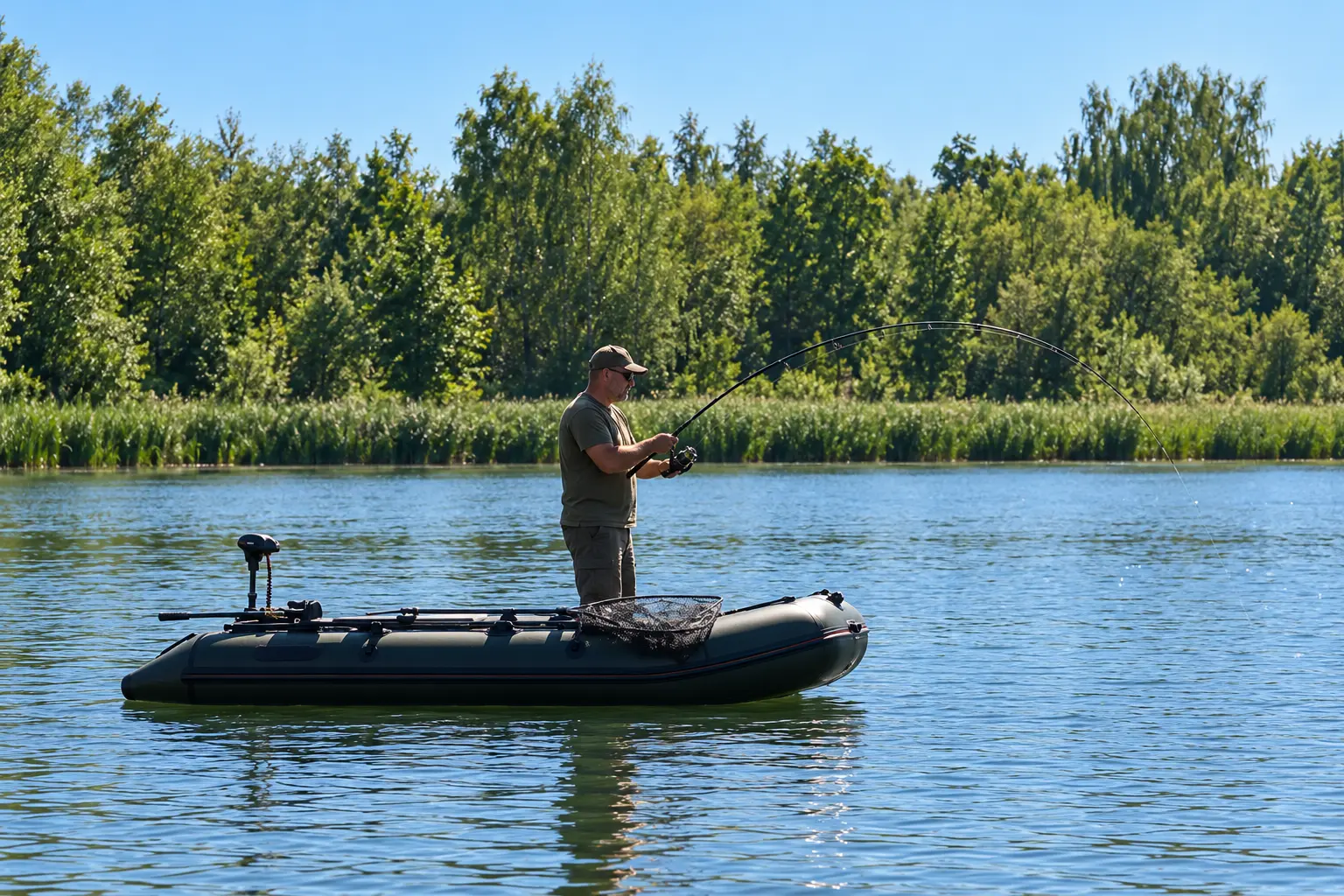
Caption: During fighting from a pontoon, a shorter rod can make maneuvering and guiding the fish to the landing net at the side easier.
Branches Overhead and Obstacles by the Water
“Overgrown shore” can mean two different problems.
Low-hanging branches over the spot limit space for the blank and movement during casting. In such a situation, a shorter rod can make fishing easier.
Reeds or obstacles between the angler and open water may require a longer tip reach to operate the rod over them. Here, extra length can be useful.
So check whether the limitation is space to move the rod or the distance you need to extend or lift the tip. These are two different selection criteria.
Should Height and Casting Technique Influence Length Choice?
Height can affect rod handling comfort but does not set a strict boundary between 12 and 13 ft. I know shorter anglers who perform very well with 13 ft rods for long casts. Being tall does not automatically mean a longer rod is better.
What matters are agility, range of motion, experience, and how a given model works with the user’s technique.
Also Check the Butt Length
Two rods with the same total length can have the reel seat positioned differently. This changes the distance between hands during casting and the way you operate the butt.
Before buying:
- Try the rod with a reel. Check if it naturally fits your hands.
- Assess the grip spacing. Notice if you can comfortably reach the end of the butt and work freely with both hands.
- Consider the usage environment. A butt comfortable for casting might interfere with maneuvering on a pontoon.
- If possible, compare rods on the water. A few calm, repeatable casts tell more about length fit than just holding the gear in a shop.
When comparing 12 and 13 ft, it’s best to choose models with similar intended use. Pairing a delicate 12 ft rod with a strong long-distance 13 ft model will show differences in several features, making it hard to judge the effect of length alone.
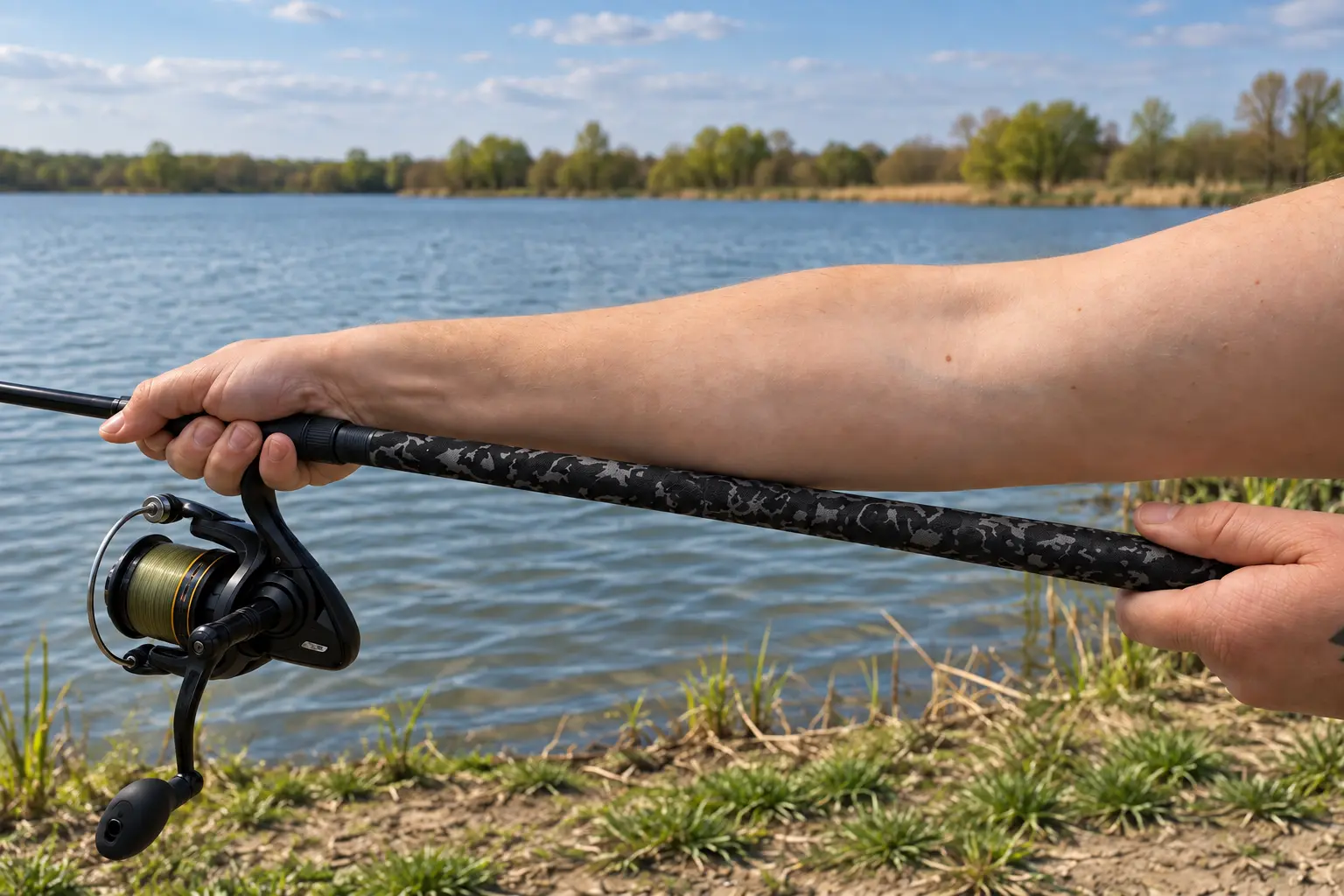
Caption: Casting comfort also depends on the distance between the butt end and the reel seat. Try the rod in your natural grip.
10, 12 or 13 ft? Comparison and Example Situations by the Water
Treat the following lengths as a starting point for gear comparison. The final choice should consider the conditions of the specific spot and rod handling comfort.
| Situation by the Water | Length to Consider | Reasons for This Choice | What Might Change the Decision? |
|---|---|---|---|
| Casting from open shore, various waters and distances | 12 ft | Combination of rod operating range and versatile use | Regular need for longer casts may justify comparing with 13 ft |
| Regular long-distance casting fishing | 12–13 ft | Ability to choose length according to technique and specific casting model | If 13 ft hinders smooth motion, a more comfortable 12 ft model may yield better results |
| Delivering rigs by baitboat, fighting from shore | 12 ft | Greater line guiding range near the shore | On open spots with limited maneuvering space, 10 ft can be considered |
| Fighting and landing fish from a pontoon | 9–10 ft | Easier handling on a small deck | Pontoon size, spot layout, and butt length |
| Stalking and frequent moving between spots | 6–10 ft | Handiness when moving between spots | Need to guide line over vegetation may favor a longer model |
| Fishing close to shore, under low branches | 6–9 ft | Less space needed to operate the blank | Shorter rod must still allow fighting and landing the fish |
When browsing carp rods, check the length of the specific variant and its intended use. One series may include models that meet different needs.
If you also need help selecting other parameters, go to the guide how to choose a carp rod.