
How to Choose a Carp Rod? Length, Action Curve, and Application
Choose your carp rod based on your rig presentation method, the fighting area, and the conditions at the fishing spot. If you’re starting with casting from the bank at short to medium distances, a 12 ft / 3.00 lb model can be a good starting point. However, the final choice should also consider the blank’s action, the weight of the cast rig, handling comfort, and transport options.
Add Rockworld-carpshop.com to your preferred sources in Google!
Table of contents
- Where to start when choosing a carp rod?
- What length of carp rod to choose?
- What do the bending curve and action of the rod tell you?
- How to match the rod’s construction to transport?
- What to check in the butt section, guides, and reel compatibility?
- Which parameters to start with when choosing a carp rod?
- How to move from parameters to selecting a specific model?
- Mistakes to avoid when buying a carp rod
- Frequently asked questions about choosing a carp rod
Where to start when choosing a carp rod?
When I select a rod for a client, I start by asking how they intend to fish. The answer often immediately narrows down the choice. We look for different features when regularly fishing by casting, others when playing fish from a float tube, and yet differently when boating out rigs with a bait boat and later playing fish from the bank.
Before you start comparing models, define:
- Method of presenting the rig: casting, bait boat, or float tube boating.
- Playing location: bank or float tube.
- Actual fishing distance: the distance at which you regularly want to place the complete rig.
- Fishing conditions: open water, vegetation, snags, and available space at the fishing spot.
- Used rigs: weight of the sinker, bait, and any PVA material with contents.
- Transport conditions: space in the car, length of the rod bag, and how you get to the fishing spot.
When fishing by casting, define the distance you really need
The statement "I want a rod for long casts" is just the beginning of the conversation. I then ask whether it means regularly fishing at, for example, 120–130 m, or attempting to exceed 150–160 m. These goals may require different equipment choices and greater skills.
However, do not assign a single mandatory length or lb value to such distances. The achieved distance also depends on technique, reel, line, and the entire cast rig.
Choose a rod for the practical distance, not just the maximum range. If you don’t need extremely long casts, you can place more emphasis on ease of loading the blank and its action during fish playing.
When boating out, determine where you will play the fish from
Boating out the rig itself does not mean you need a short rod. When using a bait boat but playing fish from the bank, conditions at the spot, possibilities during the fight, and ease of netting the fish still matter.
When playing fish from a float tube, portability becomes more important. You need to handle the rod comfortably in a limited space, change its position, and guide the carp to the landing net.
I learned this at the beginning of my attempts at float tube boating. I was then using a 12 ft rod that I had previously used for casting. During a night fight, with wind and waves, its length and stiffness made the final phase of the fight very difficult. Because of the long rod, the fish appeared on the surface too far from the float tube, and I had trouble guiding it to the net. Eventually, I managed to net a fully scaled carp over 20 kg, but after that experience, I bought rods better suited to this style of fishing.
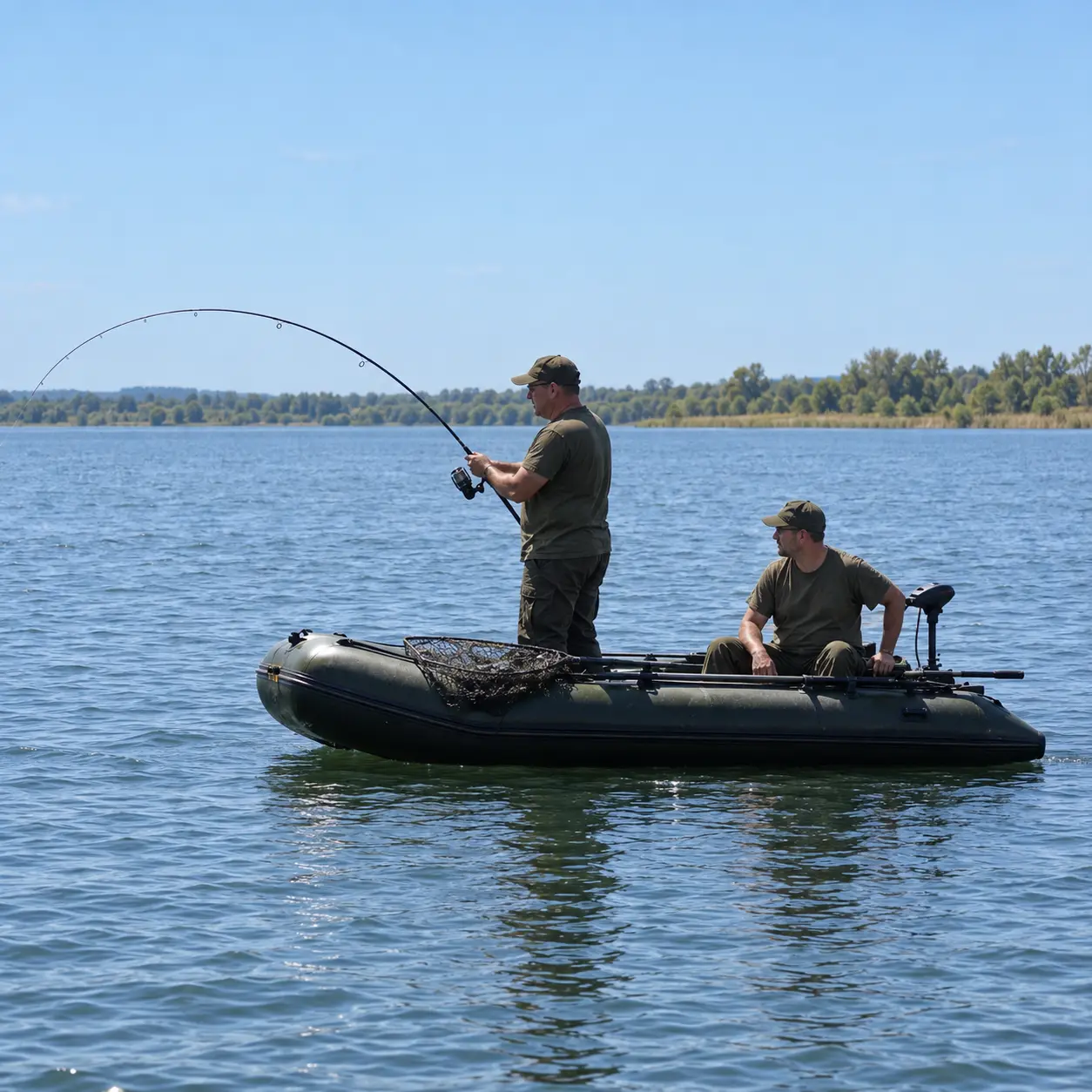
It is often during netting that you can see whether the chosen equipment fits the way it is used.
I also ask about underwater conditions. Fishing in open water and near dense vegetation or submerged trees poses different demands. In tougher spots, a power reserve may be needed, but a strong blank alone does not guarantee getting the fish out of snags.
What length carp rod to choose?
Length affects casting comfort, rod handling, and playing the fish. Choose it according to the fishing spot and fishing style.
As a preliminary division, you can consider:
- 9–10 ft: worth considering for float tube fishing, limited space, and where portability is especially important.
- 12 ft: a starting point for versatile bank fishing, covering both casting and playing fish after boating out rigs with a bait boat.
- 13 ft: length to consider when focusing on longer casts, if you have enough space and can utilize its potential.
These are guidelines, not strict assignments of applications. A shorter rod does not exclude casting fishing, and a longer one does not automatically guarantee greater range or precision.
Before buying, also think about the end phase of the fight: bank height, vegetation near the water, and the place from which you will net the fish. A detailed comparison can be found in the guide what length carp rod to choose.
What do the bending curve and rod action tell you?
Two rods labeled as 12 ft / 3.00 lb can behave very differently. The length and bending curve alone do not describe the entire blank’s characteristics.
When comparing, pay attention to three different aspects:
- Bending curve, given in lb, is a parameter related to the load needed to achieve a certain bend in the rod in a static measurement. It is not a direct indication of casting weight in grams.
- Action describes the distribution of the blank’s bend under load—its flex closer to the tip or deeper, involving more of the lower parts. This is often where the difference in rod behavior lies, even if the blank’s parameters are labeled the same.
- Blank recovery and vibration damping concern its behavior after a movement. They should not be confused with action. Simply put, it is the speed at which the rod blank returns to its original shape after being set into vibration.
Therefore, when choosing, you need information about how a specific model casts the rig you use and performs during fish playing.
Carp rod 3 or 3.5 lb?
For a first rod for bank fishing at short and medium distances, I often start with 3.00 lb. However, I also check the specific model’s action and the rigs the client plans to cast.
Among comparable models, the 3.5 lb version is worth considering when the application requires more power reserve, for example with heavier rigs. This does not mean every 3.5 lb rod will be difficult for a beginner or every 3.00 lb rod will be soft.
Choose the lb value together with the blank’s characteristics and recommendations for the specific model. When casting, consider the total rig weight, including PVA with contents. Do not determine allowable weight solely based on a simple lb-to-gram conversion.
What can you assess by holding the rod?
A preliminary "dry" comparison helps notice differences in perceived stiffness, weight, grip comfort, and vibration damping. Slightly moving the assembled rod can reveal that two similarly described models behave completely differently.
However, such a test has limitations. Shaking the blank does not replace assessing its bend under load or casting trials. It also does not reliably assign a specific action to each rod based only on which part vibrates most.
If you have the opportunity to compare models by the water, evaluate them with a rig similar to the one you actually use.
We elaborate on the meaning of markings and differences in blank behavior in the guide bending curve and carp rod action.
How to match the construction to transport?
Check the transport length before purchase. The rod should fit in the car and rod bag you will actually use to get to the water.
Two-piece models are worth considering when transporting longer sections is not a problem. With limited space, three-piece rods, travel rods, telescopic rods, or rods with a telescopic butt may be useful. The number of joints alone does not determine the quality and action of the rod—evaluate the specific construction.
Pay attention to the difference between a classic telescopic rod and the very popular recent model with a telescopic butt. In the latter, the shortening solution is located in the lower part; this does not mean the entire rod collapses like a typical telescopic rod.
Compare actual folded dimensions. Also, match the rod bag to the size of the guides and the way you transport reels if they remain mounted on the rods.
If you are choosing between a two-piece, three-piece, telescopic, or telescopic butt rod, check comparison of carp rod constructions.
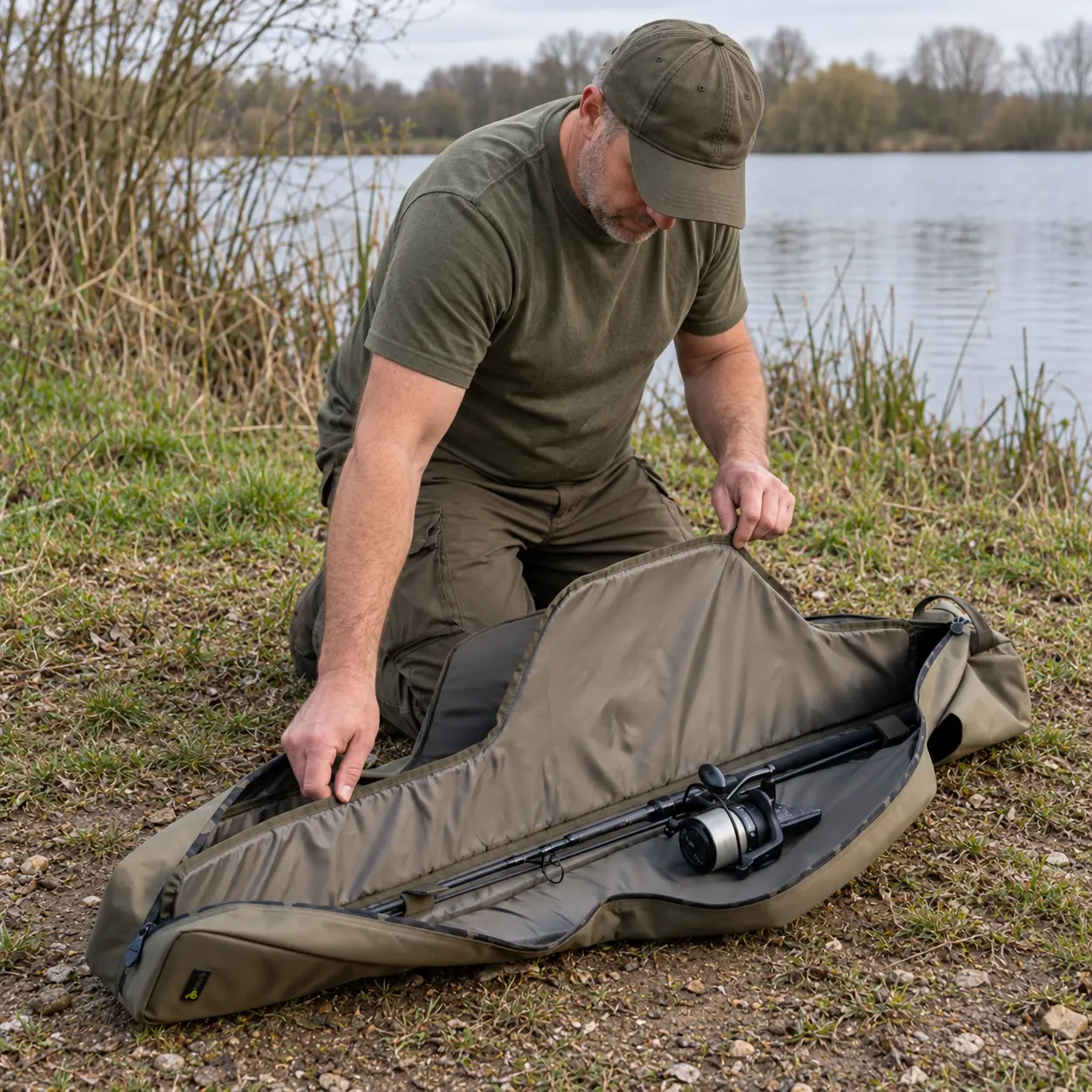
What to check in the butt, guides, and reel fit?
After defining the application and parameters, it’s time for details that decide daily comfort.
Butt and reel seat
Some carp anglers choose a simple, split butt, others look for a full cork finish. Appearance matters, but also check the thickness of the handle, grip security, and the distance of the reel seat from the butt end.
Hold the rod as during casting and playing fish. Assess whether the hand spacing is comfortable (especially when fishing with a casting rod) and whether the butt does not interfere when handling the rod in the position you most often play fish (important for float tube fishing).
Cork, EVA foam, and shrink tube are different solutions. The choice of finish should consider your grip preferences, not just the rod’s appearance in photos.
Guides
Compare the entire guide setup: their sizes, spacing, build quality, and compatibility with your reel and line. In carp rods, you will find, among others, lightweight Minima-type guides without traditional ceramic inserts. Their advantage is reducing the rig’s weight, which matters especially in casting rods.
If you plan to use braided line as the main line, check whether the manufacturer allows it for the specific rod model. Do not assume all guides without ceramic inserts have the same wear resistance. With intensive braided line fishing, especially under heavy load, consider high-quality guides with ceramic inserts designed for such use. Regardless of construction, monitor the surfaces the line runs over—grooves, cracks, and sharp edges can damage it.
Information about a 50 mm first guide alone is not enough to assess a rod’s casting capabilities. The entire guide setup and its cooperation with the reel and line matter. When using a shock leader, also check whether the knot connecting it to the main line passes freely through the guides, including the tip-top guide.
Reel
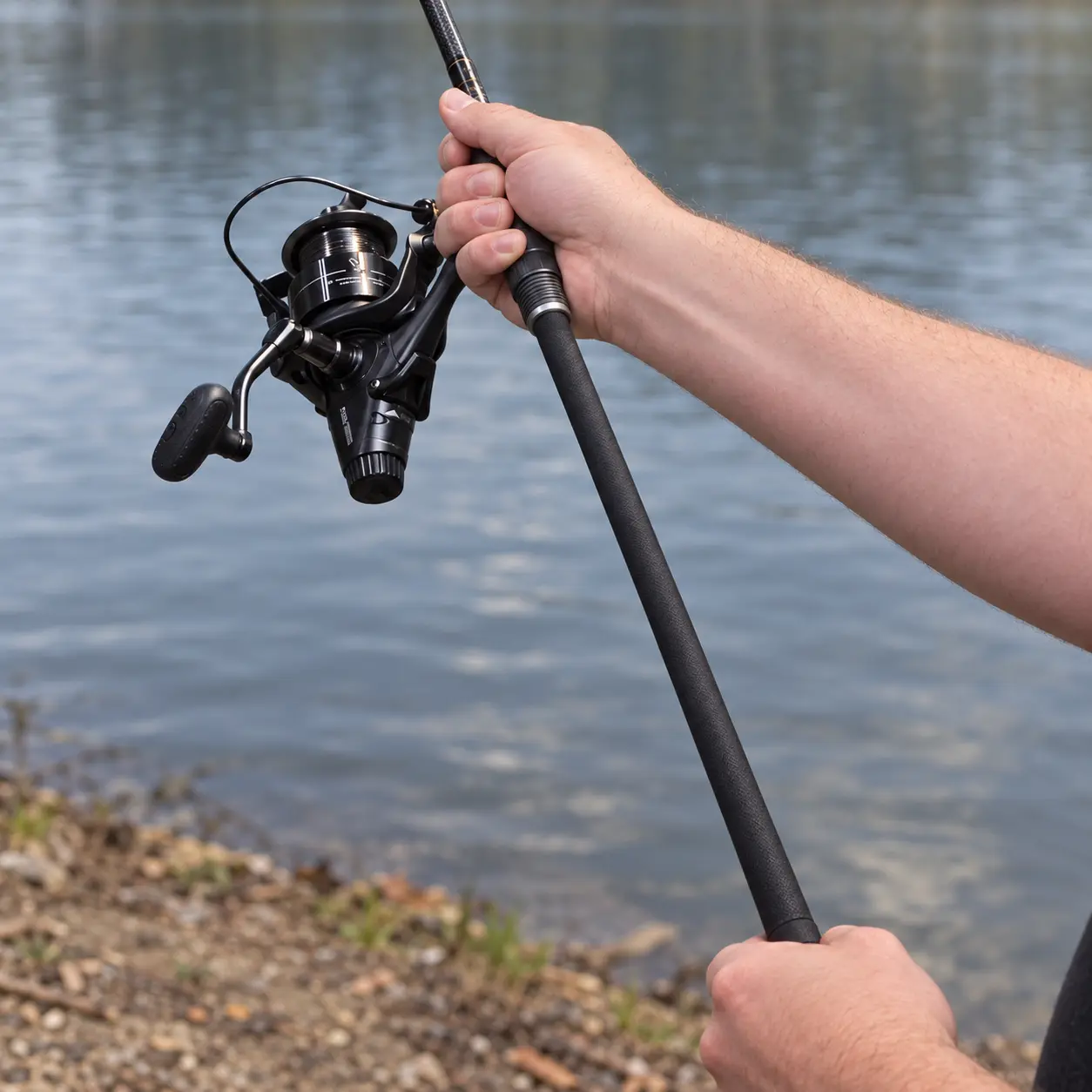
If you already have a reel, try fitting it to the rod you are considering. Check the mounting stability and the comfort of holding the entire setup. Do not rely solely on the reel size designation—its actual dimensions, weight, and fit to the seat are important. A rod that feels good in hand without a reel may feel different once the reel is mounted.
In carp fishing, the rod rests on supports most of the time, so low weight and perfect balance are not as critical as in spinning, where you hold and work the gear almost constantly. Evaluate setup comfort mainly for casting and playing fish. You will feel its weight and how it fits in your hands most during frequent recasting or longer fights.
Which parameters to start with when choosing a carp rod?
The values below help narrow down the choice to models matching a given fishing style. Treat them as approximate starting parameters for comparison—final matching also depends on blank action, used rigs, and your technique.
| Fishing style | Length to consider | Bending curve to consider | How to use this starting point? |
|---|---|---|---|
| First bank sessions by casting, short and medium distances | 12 ft | 3.00–3.25 lb | Start by comparing 3.00 lb models. Look for a rod you can comfortably handle and load with your rig, without focusing on maximum range. |
| Casting at longer distances, maintaining versatility | 12–13 ft | 3.25–3.50 lb | Compare ease of repeated casts and action during fish playing. Choose a longer or stronger variant if it truly helps with your technique and rig. |
| Specialized casting fishing prioritizing maximum range | 12–13 ft | 3.50–4.00 lb | Look for a specific model with casting characteristics. The 4.00 lb version requires justification in fishing style and proper rig matching—the higher value alone does not guarantee longer casts. |
| Bait boat boating out and playing fish from the bank | 12 ft as a starting point | 3.00–3.50 lb | Choose parameters mainly according to playing conditions. In open water, you can opt for smoother action; with vegetation and need for greater control, compare stronger variants. |
| Playing fish from a float tube on open water, without many obstacles | 9–10 ft | 2.75–3.25 lb | Check portability, blank action with fish close to the float tube, and ease of guiding it to the net. You don’t need high stiffness just because you boat rigs far out. |
| Playing fish from a float tube in conditions requiring more power reserve | 9–10 ft | 3.25–4.00 lb | Compare actual action of the lower blank section and fish control possibilities. The lb value alone does not determine how the rod behaves under heavier load. |
Ranges do not set strict application limits. A well-matched rod outside the indicated range can also fulfill the task. Do not assign a specific lb value as a guarantee of casting distance or allowable rig weight.
If transport limits you, first choose the working length and rod characteristics for fishing. Then look for the appropriate construction: two-piece, three-piece, travel, telescopic, or with a telescopic butt. A shorter folded length does not necessarily mean you must choose a shorter fishing rod.
How to move from parameters to choosing a specific model?
Once you know the application, required length, action, and transport limitations, you can compare specific models.
Pay attention to the exact variant. The same series may include rods of different lengths and bending curves, intended for different tasks. An opinion about one variant may not fully describe the others.
ROCKWORLD compilations will help you choose:
- universal carp rods ranking — comparison of selected models for several fishing styles; the current list covers the premium segment.
- carp rods ranking for casting — models for anglers who pay special attention to casting properties.
- carp rods ranking for boating out — shorter models, with special emphasis on comfort when fishing from a float tube.
- baiting rods ranking — a separate selection of gear for baiting with a catapult. SPOD rods are chosen for this task, considering, among others, the weight of the loaded catapult.
An additional reference is the compilation most popular carp rods at ROCKWORLD, showing customers’ choices. Popularity can suggest a model to check but does not replace matching it to your needs.
With defined requirements, compare carp rods available in the store and check the specifications of the chosen variant.
Errors to avoid when buying a carp rod
- Choosing solely based on length and lb value. Similar markings do not guarantee the same blank action.
- Buying a rod for maximum distances without such a need. Casting parameters should match your actual fishing style.
- Equating every boating out with playing fish from a float tube. The fish playing location significantly changes requirements.
- Ignoring the weight of PVA and other rig elements. The sinker alone does not describe the entire load during casting.
- Checking transport only after purchase. Verify folded length and rod bag fit beforehand.
- Transferring opinions between different versions of the same series. Always compare the model with the length and bending curve you are interested in.