
How do you start fishing from scratch?
To start fishing from scratch, choose a fishery, check the rules that apply there and select basic equipment for one fishing method. Plan a few hours for your first trip, focusing on preparing your setup, casting and watching for bites. All it takes is a visit to a tackle shop or browsing a few guides to see how wide the choice of equipment and fishing techniques is. However, getting started in fishing does not require major purchases. Proper preparation and choosing a solution suited to your own abilities are far more important.
Add Rockworld-carpshop.com to your preferred sources in Google!
Table of contents
If you are still wondering whether this hobby is for you, read what fishing is and why it is worth going fishing.
Is fishing difficult for beginners?
At first, fishing may seem more complicated than it actually is.
Fishing rods differ in length, intended use and specifications. Then there are reels, monofilament lines, braided lines, hooks, weights, floats, feeders and various types of bait. Someone without experience may find it difficult to determine which items are actually needed.
However, this does not mean you need to master all this knowledge before your first trip.
The best way to learn fishing is gradually. Start by understanding how a basic setup works, casting correctly and watching for bites. Only later should you try further solutions. The basics also include handling caught fish safely.
A good solution is to go on your first trip with someone who already has experience. They can show you how to prepare your setup correctly, help solve problems and point out mistakes that beginners often do not even notice.
However, if you do not have this option, you can still get started on your own. It is worth choosing a simple method and a well-prepared venue that is, above all, well stocked with fish.
How to start fishing? Six steps
Before buying your first fishing rod, establish the order of your preparations. This will help you avoid unnecessary expenses and random decisions.
-
Choose a fishing venue. Find a place you can reach conveniently and where the conditions will allow you to learn the basics comfortably.
-
Check the fishing rules. Find out whether you need an angling licence and a fishing permit, as well as what fees apply. Read the rules of the chosen water.
-
Choose a method. To start with, consider float fishing, feeder fishing or spinning. Each of these methods has a different character, so match it to your own expectations and the conditions at the venue.
-
Select your basic equipment. Buy gear intended for your chosen method. There is no need to put together several different setups for each of the methods mentioned above.
-
Prepare for the trip. Check the weather and how to get to the venue, choose suitable clothing and take something to eat, drink and protect yourself from insects.
-
Start with a short session. A few hours will allow you to get familiar with your equipment and initially check whether the chosen method suits you.
Do not treat your first decision as final. Many anglers change methods over time, try new techniques and discover which style of fishing gives them the greatest satisfaction.
Where should you go for your first fishing trip?
For your first fishing trip, it is best to choose a venue with easy access to the bank, a comfortable peg and clear rules. It is worth avoiding places with very steep banks, dense vegetation that makes casting difficult or strong currents if you do not yet have experience.
A small pond, calm reservoir or properly prepared commercial fishery can be a good choice.
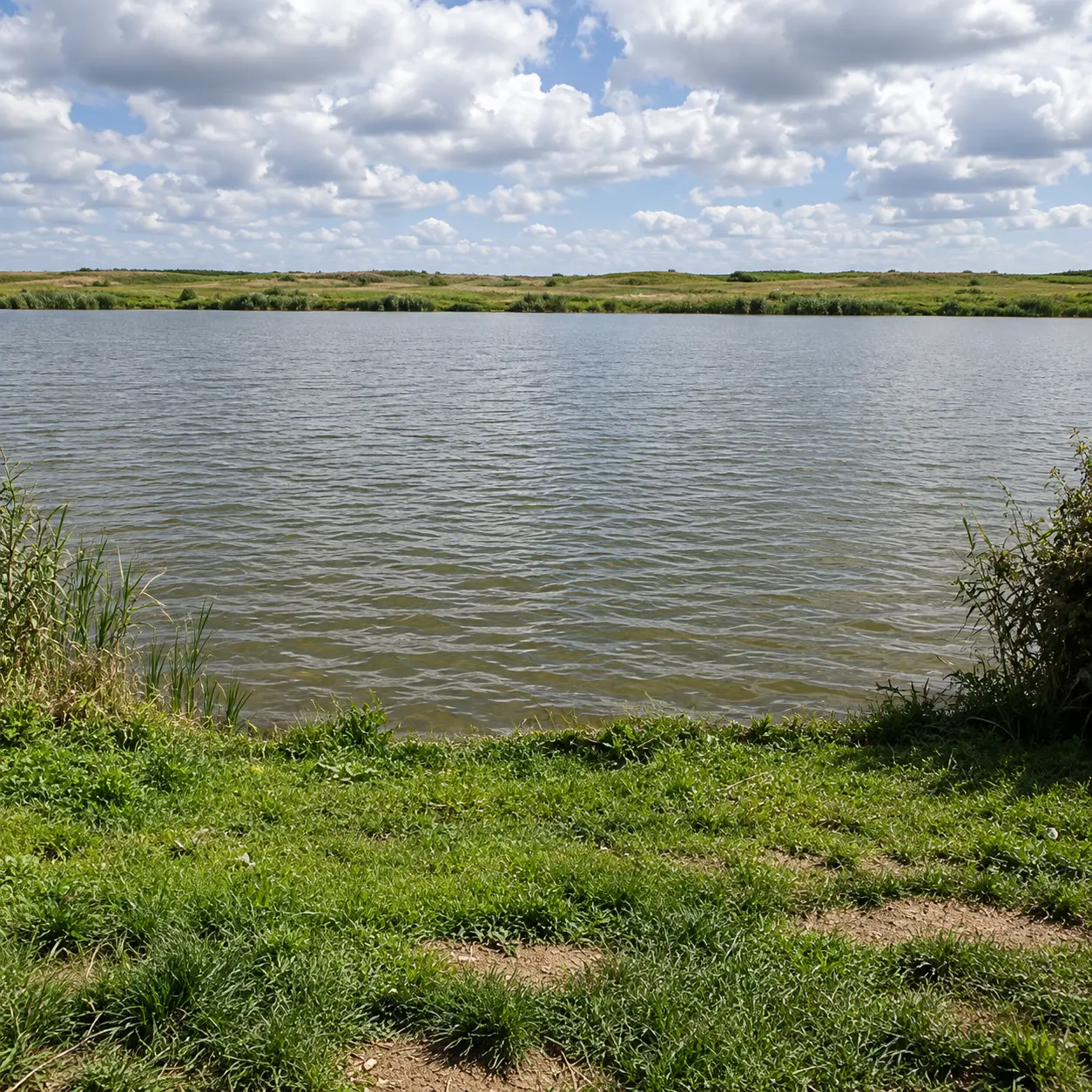
A gentle bank and open space for casting make it easier to learn the basic activities.
Is a commercial fishery a good choice?
A commercial fishery can be a good choice if it offers convenient access to the water and conditions suitable for learning. Before leaving, check the access route, peg availability and whether you can purchase a ticket for your chosen period.
Every such venue has its own rules. Some fisheries require specific equipment, the use of particular methods or advance peg booking. There may also be restrictions on baits, hooks or taking fish.
Therefore, before your trip, it is best to contact the fishery owner and ask whether the venue is suitable for a beginner.
Your first fishing trip can also take place on water made available by the Polish Angling Association (PZW) or another authorised fishery operator, provided that the applicable requirements are met.
For your first trip, choose a place that is safe, accessible and suitable for learning, rather than necessarily a fishery famous for its biggest fish – even a small fish can bring a lot of satisfaction at the beginning.
Angling licence and fishing permit
Before you start fishing, you must make sure you can fish legally on the chosen water.
In Poland, recreational fishing on inland surface waters generally requires an angling licence. On waters managed by an authorised fishery operator, their permit is also required. An angling licence alone does not replace a fishing permit.
The licence is issued from the age of 14. People below this age are exempt from having one, but may fish only under the supervision of an adult who holds an angling licence. Before going fishing with a child, also check the permit conditions.
The term „commercial fishery” itself does not mean an exemption from the licence requirement. The statutory exemption covers fishing in waters located within facilities intended for fish rearing or farming, after obtaining the permission of the authorised fishery operator. A separate exemption applies to foreign nationals temporarily staying in Poland who hold a fishing permit for the particular water.
How do you obtain the required documents?
If you are not exempt, pass the required exam and then submit an application for a licence to the district authority responsible for your place of residence. Obtain a separate permit for the water you have chosen.
What should you check before your trip?
-
Is an angling licence required on the chosen water?
-
Do you need a permit and what fees apply?
-
Which fishing methods are allowed?
-
Are there restrictions on the number of rods?
-
What are the minimum sizes and closed seasons for particular species?
-
Do catch limits and special fish-handling rules apply?
For waters made available by PZW, you should read the rules of the relevant district and the permit conditions.
Check the current requirements for the chosen water with its owner or operator.
Which fishing method should you choose to start with?
There is no single method that is ideal for everyone. Your choice depends on whether you prefer fishing in one place or actively moving around in search of fish.
Float fishing
Float fishing is one of the most accessible methods for beginners. Almost every angler started with this method.
The setup is fitted with a float, which helps keep the bait at a specific depth and indicates bites. While fishing, you watch its behaviour and learn to recognise the moment when a fish takes the bait.
Float fishing allows you to learn the basics of casting, setting the depth and responding correctly to a bite.
It works well on many ponds, lakes and calmer stretches of rivers.
Feeder fishing and watching bites on the tip
Feeder fishing is a form of bottom fishing in which the bait is positioned close to the lakebed, while bites are detected on the sensitive rod tip.
Many setups use a feeder, which allows groundbait to be delivered close to the hook.
This method requires learning how to cast the setup correctly and read tip movements, but it does not have to be complicated.
It can be a good choice for anglers who want to fish from one peg and gradually learn techniques for catching fish feeding close to the bottom.
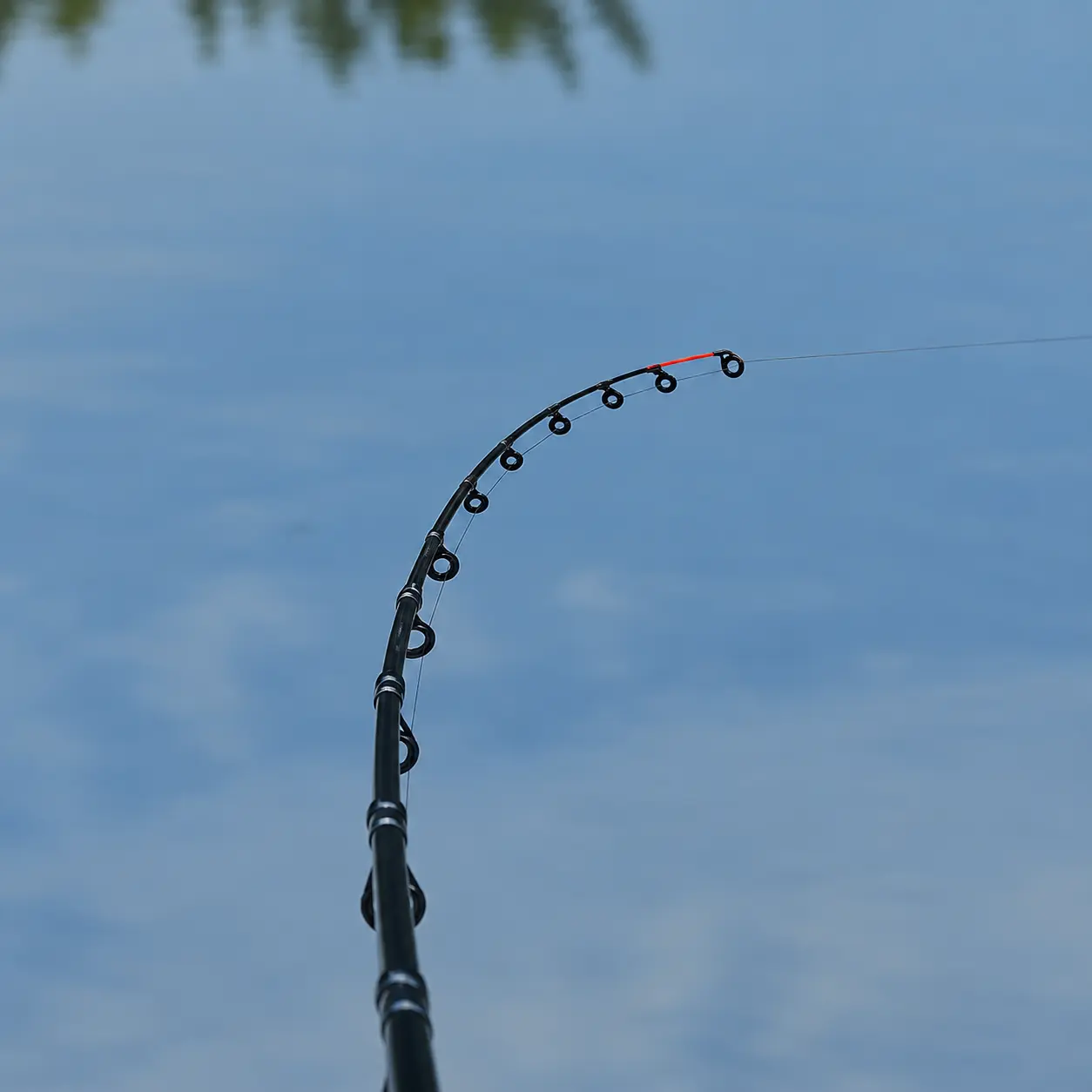
In feeder fishing, bites are detected on the sensitive rod tip.
Spinning for anglers who enjoy active fishing
Spinning differs from the previous two methods mainly in the way the lure is retrieved.
The angler casts the lure and then retrieves it by winding in the monofilament or braid with the reel and working the rod. In this way, they try to encourage a fish to attack. Artificial lures are usually used.
Spinning often involves moving along the bank, searching for fish and making many casts.
It is a method for people who enjoy activity. As with other methods, you must know the closed seasons and minimum sizes, as well as the restrictions relating to the particular venue, method and species being targeted.
Comparison of methods for beginners
| Method | Who it is for | What you learn at the beginning |
|---|---|---|
| Float fishing | For people looking for a simple start and who enjoy watching a float. | Casting the setup, setting the depth and recognising bites. |
| Feeder fishing | For people interested in fishing on the bottom and staying on one peg. | Casting a setup with a feeder and watching for bites on the tip. |
| Spinning | For people who enjoy movement and actively searching for fish. | Retrieving lures and detecting bites. |
If you have no experience and do not know what to choose, a simple float setup on calm water will be a sensible starting point. It allows you to learn the basic activities without having to master advanced techniques straight away.
What fishing equipment do you need to start?
Your first fishing setup does not need to be expensive or extensive. However, it should suit the chosen method and the conditions in which you intend to fish.
Basic equipment includes:
-
A fishing rod – its length, casting weight and construction should be matched to the fishing method.
-
A reel – needed for most popular setups. One exception is a whip, which is a float rod used without a reel.
-
Monofilament line or braid – the material should be selected according to the method, setup and fishing conditions. To start with, monofilament will work well in many simple setups.
-
Hooks – their size and type should suit the bait and the fish you intend to catch.
-
Floats, weights or feeders – chosen according to the method.
-
Baits – these may include, for example, sweetcorn, worms or boilies for float and bottom fishing, or suitable artificial lures for spinning. Their use must comply with the fishery rules.
-
Groundbait – needed in some fishing methods to attract and hold fish in the chosen spot. It is most commonly used in float and bottom fishing.
-
A landing net – makes it easier to land fish safely. Match its size and handle length to the fish and the height of the bank.
-
A disgorger or fishing forceps – allow you to remove the hook carefully.
-
A tackle box for small accessories – helps keep spare hooks, weights and other setup components organised.
A comfortable seat and clothing suitable for the weather will also be useful.
Not every item listed will be needed for every method. For example, when spinning, you do not use a classic float setup or a feeder.
Before buying, it is worth telling the seller where you intend to fish, which method you will use and what budget you want to allocate for your first setup.
A well-chosen, simple set will be much more useful than randomly purchased accessories.
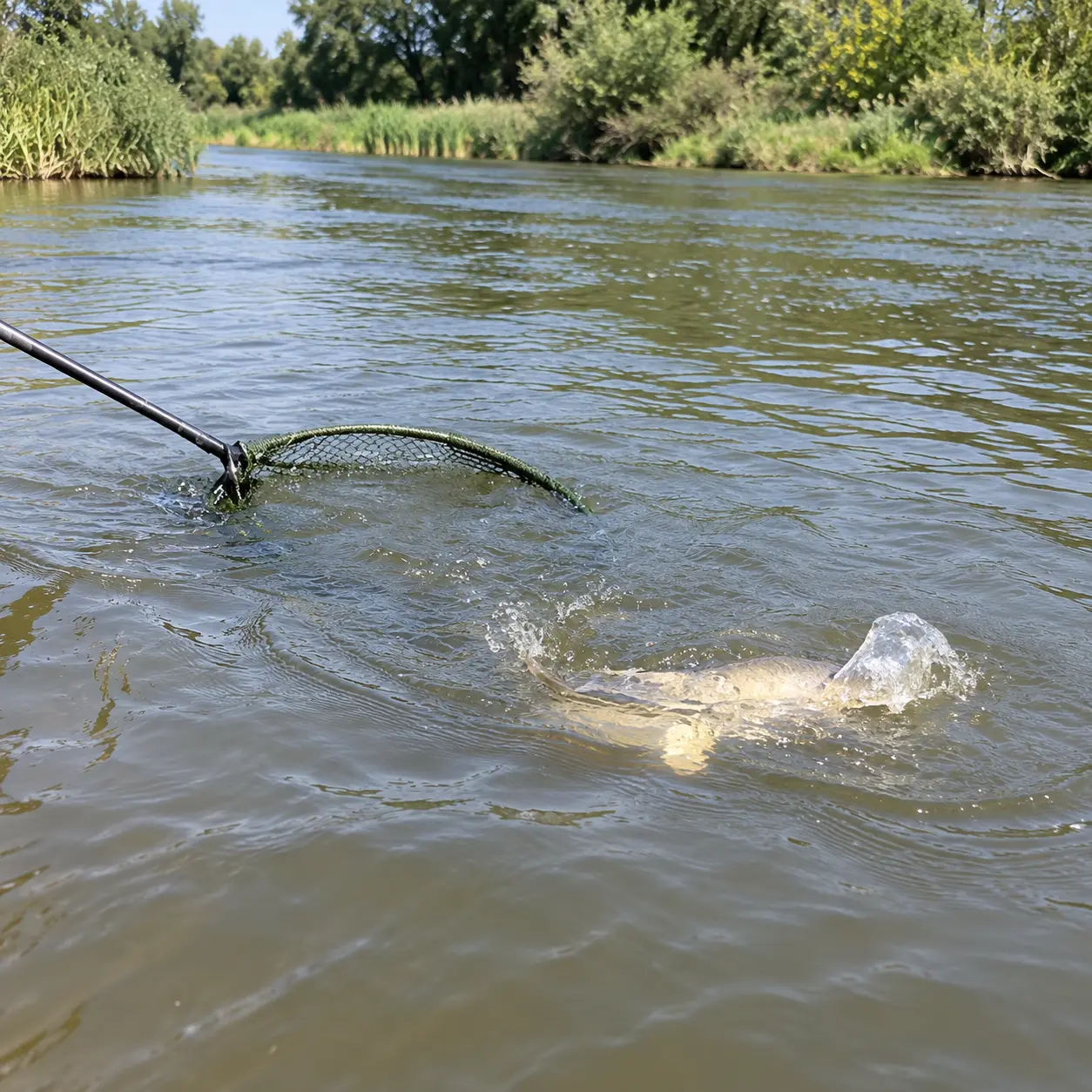
A landing net prepared before you start fishing will be at hand when it is time to land a fish.
What should you not buy at the very beginning?
Buying equipment just in case can easily lead to unnecessary expenses.
Trying to prepare for every situation straight away may result in buying equipment that you cannot yet use or that does not suit your chosen method.
At the beginning, it is worth avoiding:
-
buying several different rods for methods you do not yet know;
-
investing in the most expensive equipment without knowing how it is used;
-
stocking up on large quantities of baits and small accessories;
-
buying products solely because they are popular;
-
putting together extensive equipment for specialist fishing methods.
There is also no need to buy everything in one day.
After a few trips, it will be easier to assess what you actually lack, what is worth replacing and in which direction you want to develop your interest.
At the beginning, what matters is whether the equipment suits your chosen fishing style and whether you can use it.
What should you take on your first fishing trip?
Before leaving, prepare a short list of things to take with you. This will help you avoid finding out only once you are at the water that a basic part of your setup is missing. Here is an example list for your first float or bottom fishing trip.
-
A fishing rod and reel, if required for the chosen method.
-
Prepared monofilament line or braid.
-
Hooks and basic accessories.
-
Floats, weights or feeders, depending on the method.
-
Baits and, if necessary, groundbait.
-
A landing net.
-
A disgorger or forceps for removing hooks.
-
A box with spare setup components.
-
A chair or seat if you plan to fish from one spot.
-
Clothing and footwear suitable for the weather.
-
Drinking water and something to eat.
-
A phone with a charged battery.
-
An angling licence, permit and other documents required at the particular venue, if applicable to you.
-
A rubbish bag.
Also take a basic first-aid kit and a towel for drying your hands. If the fishery requires additional fish-care accessories, such as an unhooking mat, include them on your list.
Your first fishing trip does not have to last from morning until evening. It is better to plan two or three hours in good conditions than a long trip for which you are not yet prepared.
How should you prepare for your first fishing trip?
Simply packing your equipment is not enough. A few simple tasks done in advance will help you avoid problems at the water.
Check the weather
Strong wind, heavy rain or thunderstorms are not suitable conditions for learning. For your first trip, it is best to choose a day with the most stable weather possible.
If a storm is approaching, stop fishing, put your rods down, move away from the water and find safe shelter. Do not wait it out on your peg or beneath a lone tree.
Check the route and access to your peg
Not every venue has parking directly by the water. Sometimes you need to walk a longer distance with your equipment.
It is worth finding out in advance where you can park and how to reach your peg safely.
Prepare your equipment the day before
Check whether all components fit together, whether the reel works correctly and whether you have the required accessories.
At home, practise assembling your rod and operating the reel. Practise casting by the water in a safe, open area, without a hook and with a weight matched to the rod. Before casting, make sure there are no people or obstacles behind you.
Learn the rules for handling fish
Before your first trip, find out how to land a fish correctly, remove the hook safely and handle the fish in line with the fishery rules.
Handle fish with wet hands, do not squeeze them and minimise the time they spend out of the water. Do not place them on dry, hard ground or hold them through a dry towel. If you use an unhooking mat, wet it before placing the fish on it.
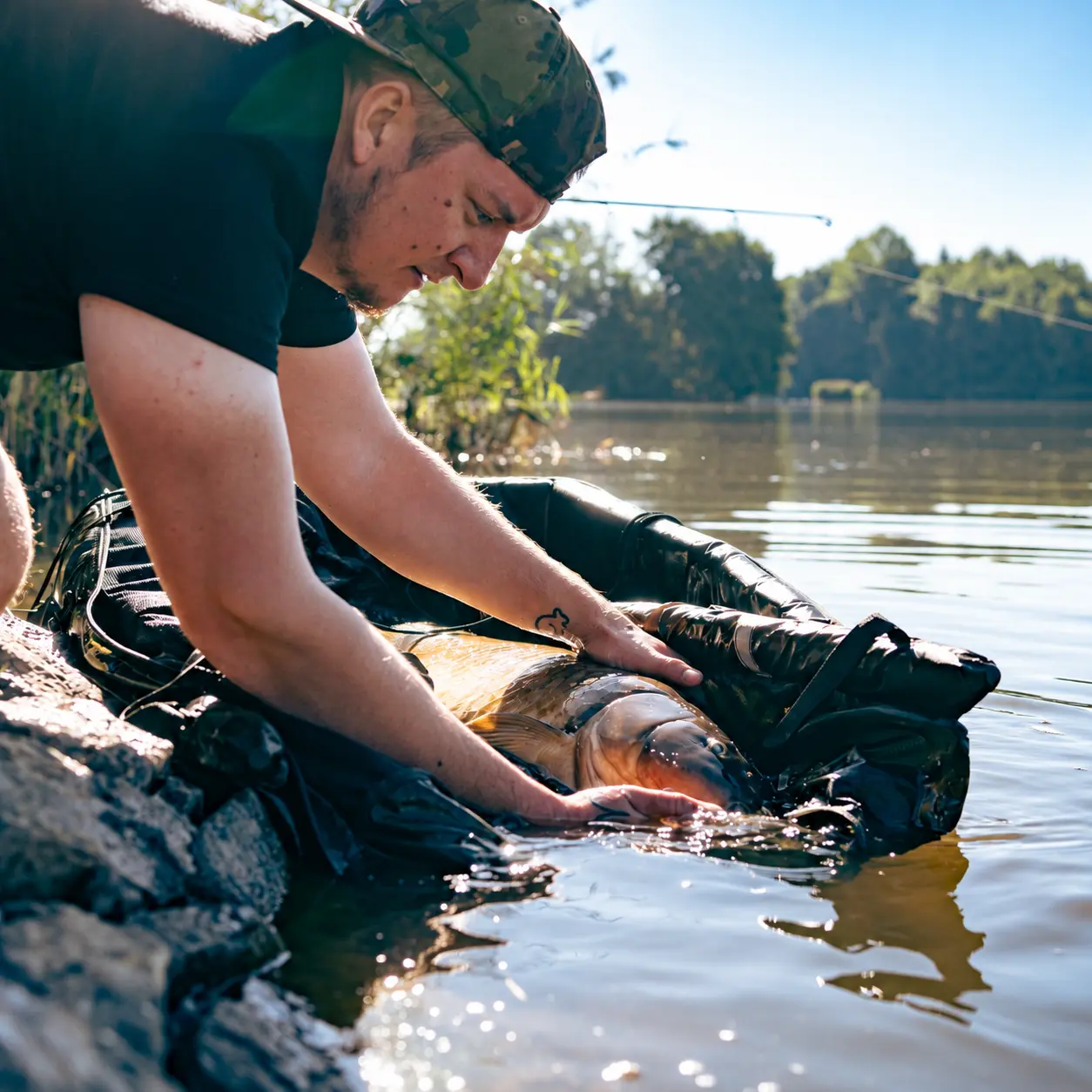
Support the fish with wet hands and minimise the time it spends out of the water.
When releasing a caught fish, be prepared to carry out the process efficiently and safely.
Do not plan too many things at once
Your first trip should allow you to practise the basic activities calmly. You do not have to test different baits, several pegs and multiple fishing methods all at the same time.
Mistakes worth avoiding at the beginning
-
Buying too many accessories. More accessories do not mean a greater chance of successful fishing. Without basic knowledge, it is difficult to use extensive equipment properly.
-
Ignoring the rules. Not knowing the rules may lead to breaking regulations or permit conditions.
-
Choosing a venue that is too demanding. Difficult bank access, underwater snags or strong current can make learning the basic activities harder.
-
Choosing a method that does not match your expectations. Someone who likes movement will not necessarily enjoy many hours of fishing from one peg. Conversely, someone who prefers staying in one place may not enjoy active spinning.
-
Evaluating a trip solely by the fish caught. Bites depend on many factors, including weather conditions, fish activity, the fishing location and the way the bait is presented.
-
Getting discouraged after one attempt. One trip is not enough to assess your skills or the effectiveness of a particular method.
-
Not preparing for the weather. A lack of suitable clothing, headwear or rain protection can quickly end even a well-planned trip.
-
Leaving rubbish by the water. Used line, bait packaging and other waste should be taken away with you. Discarded line and hooks in particular can pose a danger to animals.
-
Moving on to advanced techniques too quickly. Without mastering the basics, it is difficult to assess consciously whether more complex solutions are actually needed.
What should you do if you do not catch anything?
It may happen that during your first trip, you do not see even a single bite. A lack of bites alone does not prove that you chose the wrong equipment or that fishing is not for you.
It is worth considering a few things.
Was the setup prepared correctly? Was the bait presented at the right depth? Was the chosen spot suitable for the method? Were the conditions favourable for fish activity?
You will not always find the answer immediately. Over time, however, you will start to notice relationships between the location, weather, fishing style and results.
It is a good idea to record basic information after every trip: the date, venue, weather, method used, bait and any bites. Such notes allow you to compare experiences and draw conclusions.
During your first session, focus primarily on preparing the setup correctly, making a few successful casts, learning to watch for bites and handling the equipment safely.
Catching a fish will be an additional success, but it should not be the only criterion for evaluating the trip.
What next if fishing gets you hooked?
After a few trips, you will probably start to understand better which fishing style suits you most.
You may find that you feel most comfortable float fishing, watching the float's movements and improving your precision. Perhaps feeder fishing and the possibilities offered by bottom fishing will interest you. You may also discover that spinning, moving around and actively searching for fish suits you best.
Treat your first trips as an opportunity to gain practical experience. It is this experience that will help you make better decisions with future purchases and choose the methods that genuinely suit you.
Or perhaps after a few trips you will want to find out what it is like to wait for a carp bite and take on this powerful fish during the fight? Before planning your first carp session, check how to start your carp fishing adventure. You will learn about the equipment used in this method, find out what bite alarms are for and what gear helps ensure proper care of a caught fish.
