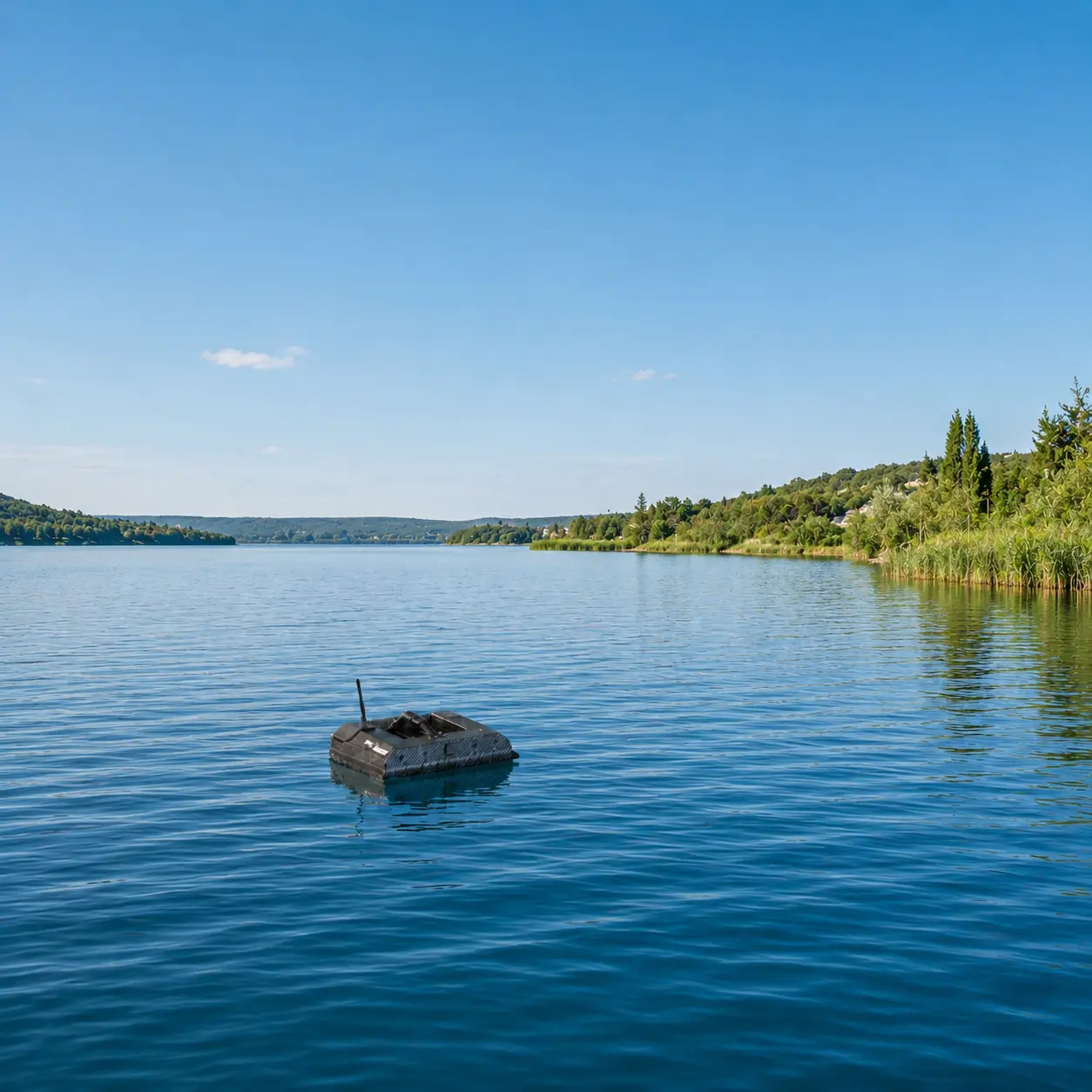
Why aren’t you casting your rig where the carp are actually feeding?
Lack of bites often does not result from the wrong bait, but from the placement of the rig. If the rig does not land exactly where the carp are feeding, even a difference of 1–2 meters can determine silence on the bite alarms. In this post, we explain why precision, distance, and repeatability of rig placement are so important when carp fishing.
Add Rockworld-carpshop.com to your preferred sources in Google!
Table of contents
- Why is just finding a good spot not enough?
- How important is the precision of presenting your rig?
- When does casting from the bank start limiting your effectiveness?
- Why is repeatability in presenting your rig so crucial?
- Why is your neighbor catching fish while you’re not?
- How to recognize if your rig presentation might be the problem?
- One of the solutions could be using a bait boat
- When does a bait boat really make sense?
- When is a bait boat not necessary?
- Summary
- Frequently Asked Questions
Why is simply finding a good spot not enough?
Finding an interesting spot on the water is just the first step. The spot may look textbook-perfect: a harder bottom patch, a transition from mud to gravel, near vegetation, a drop-off, a shelf, or a natural fish route. However, this doesn’t mean that every presentation of your rig in that area will immediately trigger a bite.
A good spot may only be effective periodically. In spring, carp might appear there because the water warms up faster. In autumn, they might scour such places for food before the temperature drops. At other times, the same bottom section may be far less attractive.
Another issue is the actual placement of the rig. Even if the spot is well chosen, the rig might land too far, too close, in too deep mud, or outside the hard patch where fish actually feed. Then the angler feels like they’re fishing in a good spot, but in reality, their bait is outside the key feeding zone.
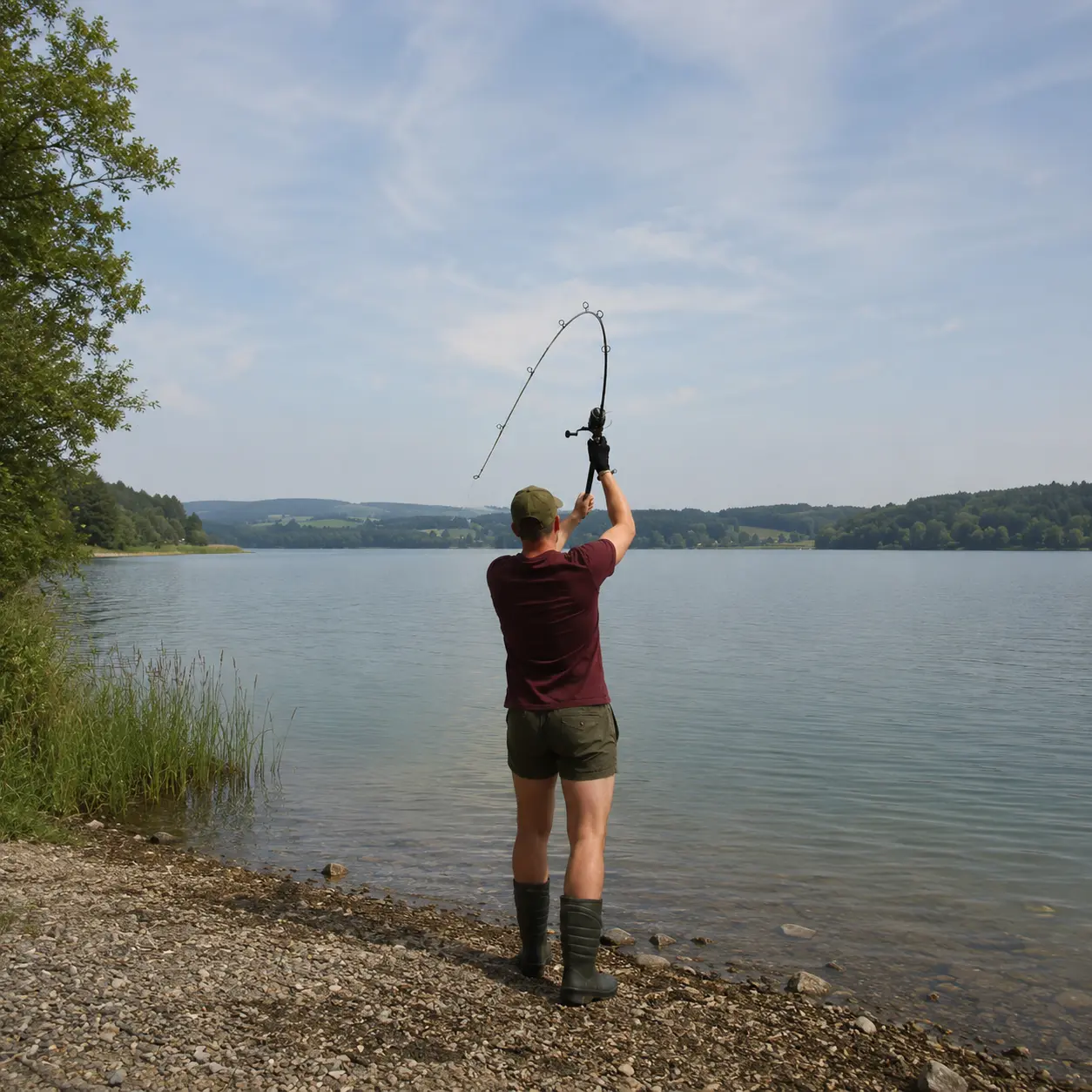
Precisely placing the rig from the bank on large waters can be challenging, especially when fish feed far from the peg.
How important is rig placement precision?
Precision in rig placement is crucial, especially on more challenging waters. On some fisheries, a few meters difference doesn’t change much, but there are situations where even 1 meter can determine fishing success.
This is most evident when fishing near snags, water lilies, reeds, or other safe spots where carp hold during feeding. Fish may only leave such a zone briefly or feed right on its edge. If the rig lies a meter too far, the carp might simply not approach it.
The same applies to waters with distinct bottom features. A small mound, gravel shelf, transition from mud to harder bottom, or a channel can be places where fish regularly stop. A rig placed next to such a spot might land in deep mud where the bait works less effectively, is less visible, or simply lies outside the fish’s feeding route.
That’s why precision is not a minor detail. In many cases, it is one of the most important factors for successful carp fishing.
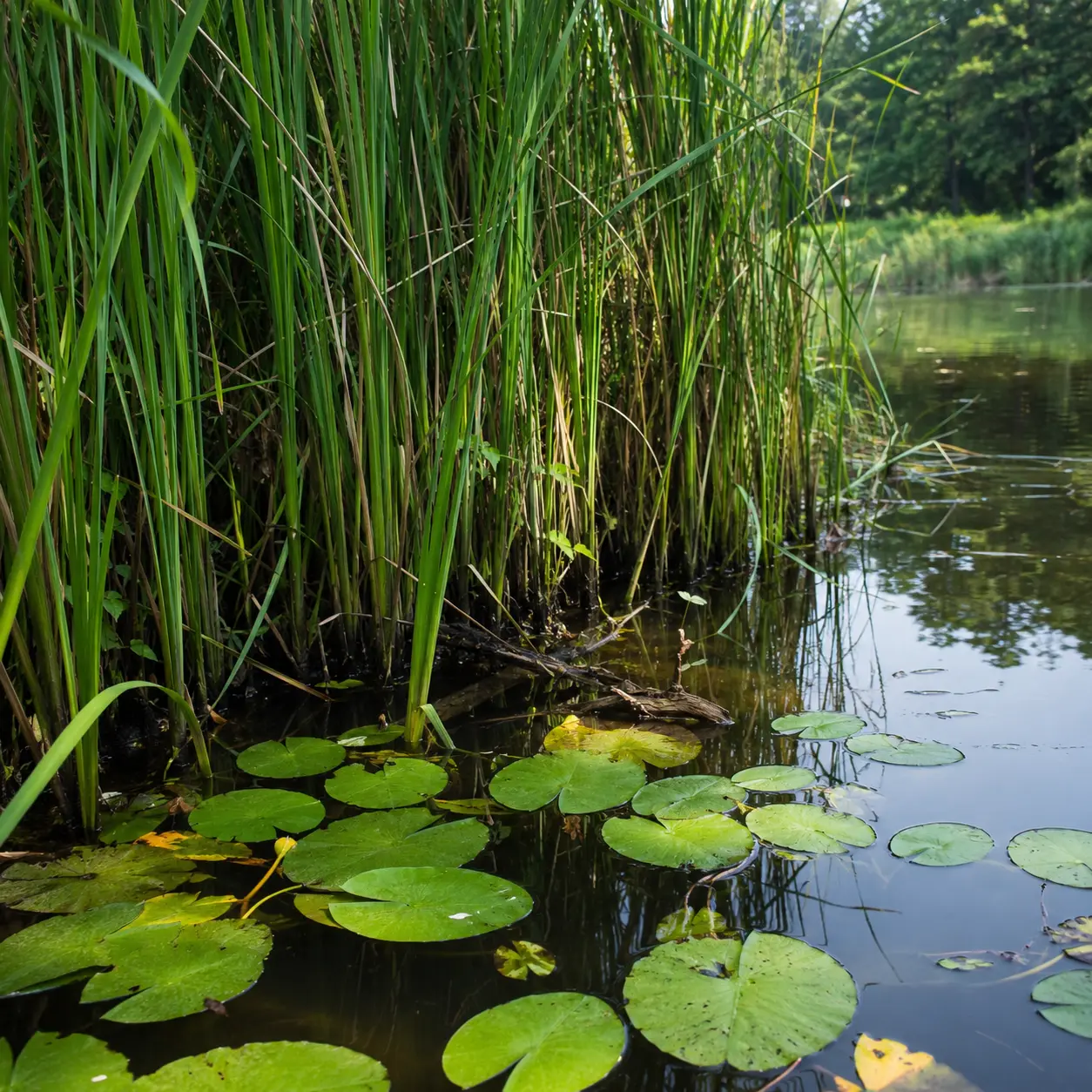
Water lilies often create a safe feeding zone for carp, so the rig must land very close to the vegetation.
When does bank casting start limiting effectiveness?
Casting from the bank is an effective fishing method and is sufficient on many waters. The problem arises when the best spot lies beyond comfortable casting range or conditions on the water prevent accurate rig placement.
Sometimes fish feed 150–200 meters from the bank and have no reason to leave that area. They may hold to a specific bottom patch, a safe strip of vegetation, submerged snags, or a natural route. In such cases, even excellent casting technique may not be enough.
Weather conditions also limit casting. Headwinds reduce casting distance. Crosswinds push the rig off course. Fog, heavy rain, waves, and night make it harder to judge direction and distance. Even if the angler can cast far, consistently hitting the same spot under these conditions becomes much more difficult.
| Water situation | How it affects rig placement | Possible effect |
|---|---|---|
| Fish feed far from the bank | Rig doesn’t reach the active zone | No contact with fish |
| Headwind | Reduces effective casting distance | Rig lands short of the spot |
| Crosswind | Pushes rig sideways | Lack of precision |
| Night or fog | Makes judging direction difficult | Hard to repeat the cast |
| Vegetation and snags | Require precise rig placement | Errors may mean no bites |
| Deep mud near the spot | Rig may land outside the hard patch | Bait lies in an unfavorable place |
Why is repeatability of rig placement so important?
Repeatability is just as important as precision. A single accurate cast can trigger a bite, but only regularly placing the rig and bait in the same area builds an effective fishing spot.
If every cast lands somewhere else, bait spreads over a large area. Fish start to scatter, spend more time searching for food, and it becomes harder to concentrate them where the hookbait lies. With scattered baiting, food competition is lower, and carp may feed more cautiously.
It’s different when the rig and bait consistently land in the same spot. Then fish can focus on a smaller area and often feed more confidently when competition is higher. This is especially important on spots with specific bottom features like small mounds, hard shelves, channels, steep drop-offs, or edges of vegetation.
When fishing near a steep bank, a rig placed too low may lie outside the zone where fish actually feed. Near water lilies, the bait often needs to be placed almost at the vegetation’s edge. In such cases, repeatability is not an extra but a condition for success.
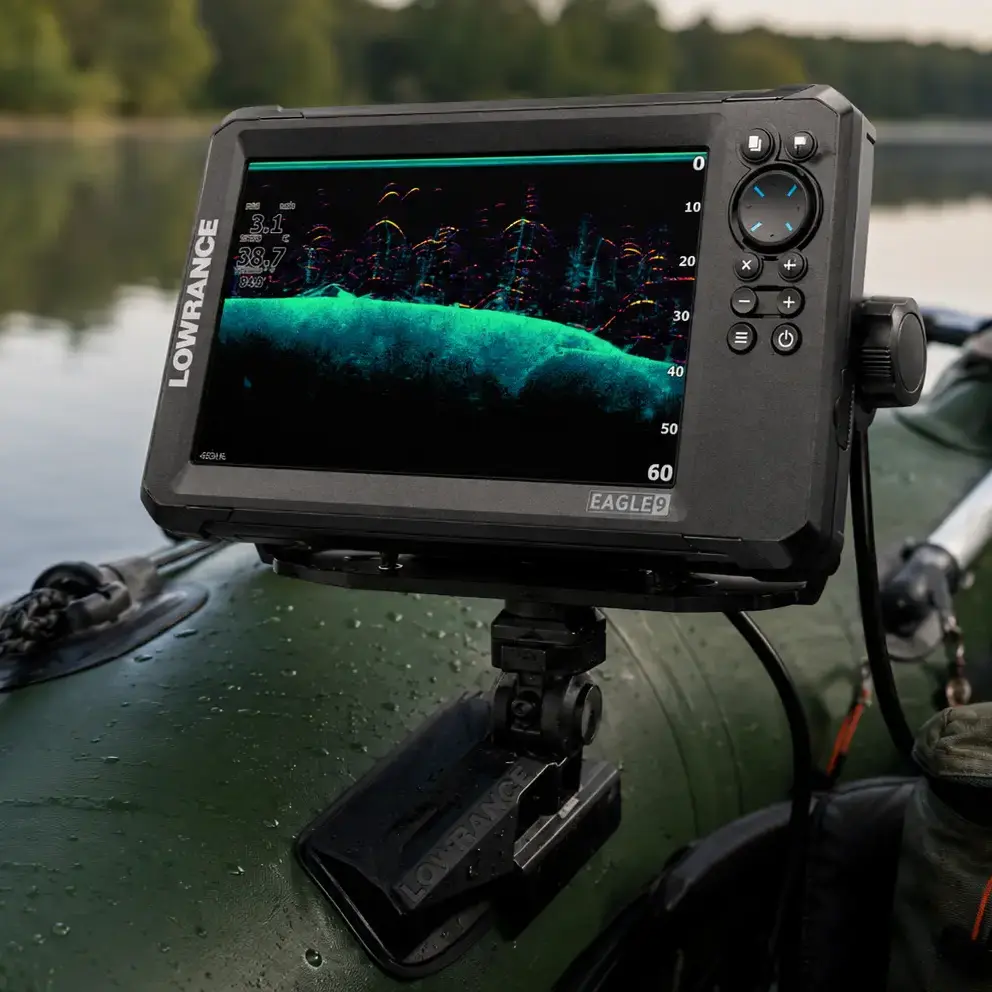
What looks like a small difference in the bottom underwater often decides whether the rig lies in the right spot.
Why is your neighbor catching fish while you’re not?
It often happens that two carp anglers fish seemingly very similarly, but only one regularly gets bites. The difference isn’t always due to bait, groundbait, or luck. Sometimes a few meters, different bottom structure, or more precise rig placement makes all the difference.
Your neighbor might be fishing a channel where fish naturally move and stop to feed. You might be fishing a dozen meters away, seemingly in the same part of the water, but already outside the fish’s route. The result can be one angler landing fish after fish, while the other doesn’t get a single bite.
The same applies to bottom type. A hard gravel shelf can attract fish because of snails, larvae, and other natural aquatic organisms. A few meters away, deep mud may start, where carp feed less eagerly. If your rig lands there, even the best bait might not produce results.
In such cases, the problem isn’t that there are no fish in the water. The problem may be that the rig lies outside the area where carp actually want to feed.
How to recognize if rig placement might be the problem?
It’s not always easy to immediately tell that rig placement is the issue. However, there are signals that should raise your attention.
You can usually suspect a rig placement problem when:
- other carp anglers are catching fish, but you get no bites at your peg,
- fish are visible in the swim but don’t react to your rig,
- bites only occur after an exceptionally good cast,
- it’s hard to repeat the same cast several times in a row,
- wind, night, rain, or fog clearly hinder rig control,
- groundbait spreads over too large an area,
- you’re unsure if the rig lies on hard bottom or in mud,
- the best spot is near snags, vegetation, or at a long distance.
In such situations, changing the boilie isn’t always the first solution. It’s worth considering first whether the rig really lands where it should.

At night, it’s much harder to judge casting direction and distance, so consistently placing the rig in the same spot becomes a big challenge.
One solution might be rig delivery by bait boat
One way to solve problems with distance, precision, and repeatability is rig delivery by bait boat. This doesn’t mean every carp angler or every water needs a bait boat or pontoon. Bank casting remains an effective method if it allows accurate and repeatable fishing in the chosen spot.
Using a bait boat makes sense when the problem isn’t the bait itself but the inability to place the rig exactly where the fish feed. If carp activity mainly occurs at night, fish are far from the bank, or the rig must be placed very precisely near vegetation, snags, or a specific bottom patch, a pontoon or bait boat can significantly ease fishing.
Sometimes this is very obvious on the water. Your neighbor catches fish because they located carp beyond effective casting range. In such a case, rig delivery by bait boat may not just be a convenience but the only real way to reach active fish.
When does a bait boat really make sense?
A bait boat makes the most sense when it solves a specific problem: too great a distance, lack of precision, difficulty with repeatability, or complicated conditions on the water. It’s not equipment needed all the time, but in certain situations, it can significantly improve control over fishing.
Most often, a bait boat helps when:
- fish feed beyond effective casting range,
- you need to fish at distances around 150–200 meters or more,
- fish activity mainly occurs at night,
- the rig must land very close to lilies, reeds, snags, or submerged obstacles,
- you need to regularly and precisely bait the same spot,
- the water has a challenging bottom structure,
- deep mud lies next to a good spot,
- wind, waves, rain, or fog hinder accurate casts,
- repeatable rig placement in the same spot is required,
- the angler wants to reduce errors caused by fatigue during long sessions.
Under such conditions, a bait boat doesn’t replace knowledge about the water but helps put it into practice. If you know where the fish feed, it’s easier to place the rig exactly there and return to that spot during subsequent deliveries.
When is a bait boat not necessary?
A bait boat isn’t necessary on every water. If the angler fishes close to the bank, controls casting well, and can regularly hit the chosen spot, classic casting fishing may be fully sufficient.
It’s also not always worth starting with a bait boat if the problem is poor fish location. Even the best delivery won’t help if the rig lands where carp don’t visit. First, you need to understand the water, find active zones, and assess whether rig placement really limits effectiveness.
A bait boat also won’t be a solution on waters where delivery is prohibited or where fishing takes place very close to the bank and doesn’t require extra equipment. It makes the most sense when it addresses a specific need: greater distance, more accurate rig placement, or better repeatability.

Windy conditions can limit casting precision, reduce effective distance, and make repeatable rig placement in the same spot difficult.
Summary
No bites don’t always mean the bait is bad, the groundbait doesn’t work, or there are no fish in the swim. Very often, the problem starts with the rig not landing exactly where carp really feed.
On tougher waters, a difference of 1–2 meters can be huge. A rig placed next to a hard shelf, outside a channel, too far from vegetation, or in deep mud may produce no results, even if the water looks very promising.
That’s why before changing bait, it’s worth considering whether distance, precision, or repeatability of rig placement is the issue. If that’s what limits fishing success, one solution might be rig delivery by bait boat.
If you want to better understand the differences between popular rig delivery methods, check out the guide: Bait boat or pontoon – what to choose for carp rig delivery?. A good next step might also be the article: Bait boat – how to choose one you won’t regret? Complete carp angler’s guide.