
Bait boat or pontoon – which to choose for carp rig delivery?
Bait boat or pontoon – which to choose for carp rig delivery? If you mainly fish at commercial waters or waters without many snags, a bait boat is a better and more convenient choice. It allows you to quickly prepare for fishing, precisely deliver your rig with bait, and in versions equipped with GPS and sonar, it also helps you fish more intelligently.
A pontoon is a better solution for technically challenging waters, where carp may swim into snags after taking the bait, and fighting the fish from the bank can be risky. The ability to approach the fish, position the rig behind an island, or thoroughly check the bottom gives the pontoon an advantage on large and demanding waters.
In the following section, we compare bait boats and pontoons in terms of convenience, precision, transport, venue rules, and safety during the fight.
Add Rockworld-carpshop.com to your preferred sources in Google!
Table of contents
- What is the difference between a bait boat and a pontoon?
- Bait Boat – Top Advantages
- Bait Boat – When Does It Work Best?
- Pontoon – Key Benefits
- Pontoon – Drawbacks and Limitations
- Bait Boat vs Pontoon – Comparison Table
- Which to Choose for Commercial Waters?
- Which to Choose for Large Lakes, Reservoirs, and Wild Waters?
- Bait Boat with Fish Finder or Pontoon with Fish Finder?
- Is It Worth Buying a Bait Boat Instead of a Pontoon?
- Most Common Mistake When Choosing Between a Bait Boat and a Pontoon
- Bait Boat or Pontoon for Beginner Carp Anglers?
- Bait Boat or Pontoon – Final Choice
- FAQ – Bait Boat vs Pontoon
In practice, the question “bait boat or float tube – which one to choose?” doesn’t have a one-size-fits-all answer for every carp angler. It all depends on the fishery, regulations, experience, and whether convenience of bait delivery or full control over the rig on the water is the priority. A bait boat allows you to quickly, comfortably, and very precisely deliver your rig with bait to the chosen spot. A float tube, on the other hand, offers more options on technically challenging waters, especially when there are snags, islands, underwater obstacles, or the need to get physically closer to the fish.
However, if the angler is just starting with bait boat fishing or mainly fishes commercial waters, a bait boat will often be a more sensible first choice than a float tube. It’s easier to transport, quicker to prepare, and simpler to use daily. Additionally, modern bait boats increasingly come equipped with GPS to save spots on the fishery, as well as fish finders to read bottom structure, allowing more informed fishing without investing in a float tube, motor, battery, and all the extra gear.
What’s the difference between a bait boat and a float tube?
Simply put, a bait boat is mainly used to deliver rigs and bait, while a float tube lets the angler physically get out on the water. This difference might seem straightforward, but in practice, it heavily affects fishing style.
A bait boat lets you place the rig and bait in compartments, navigate to the chosen spot, and drop everything exactly where planned. Modern models often feature GPS systems, waypoint memory, autopilot return, and fish finders that read depth, bottom structure, and often fish presence. That’s why a bait boat with a fish finder or bait boat with GPS is one of the most popular solutions among carp anglers aiming to increase precision.
The float tube offers more possibilities on technical waters. You can thoroughly probe the bottom, position rigs in spots inaccessible by a straight bait boat run from the bank, get close to snags, and in tough situations assist in safely unhooking fish. This is a huge advantage, but keep in mind float tubes require more experience, extra equipment, and suitable conditions for safe use.
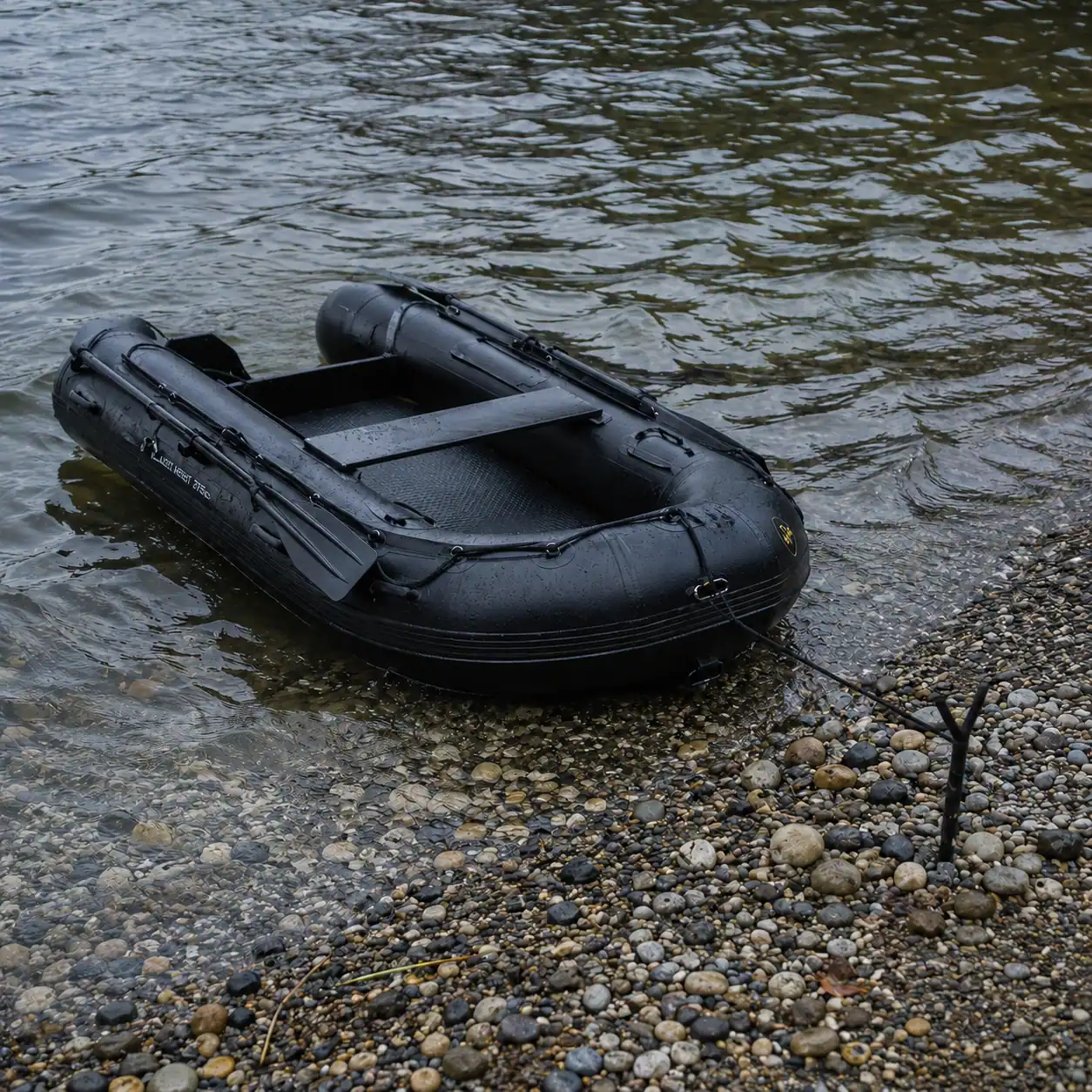
Bait Boat – Key Advantages
Ease of Use
One of the biggest advantages of a bait boat is its simplicity. You just prepare your rig, place bait and leader in designated compartments, and then pilot the boat to your chosen spot. For beginners or intermediate carp anglers, this is a huge convenience.
No need to inflate a float tube, mount a motor, connect a battery, set up a fish finder on a separate mount, or organize lots of additional gear. A bait boat is ready to work much faster, which is crucial especially during short sessions.
If you’re just considering how to get into bait boat fishing and aren’t sure what specs to focus on, a helpful resource is the guide “Bait Boat – Which One to Choose to Avoid Regrets? Complete Carp Angler’s Guide”. It covers range, compartment capacity, fish finder types, GPS, and build quality in more detail.
More Convenient Transport
When it comes to transport, a bait boat definitely beats a float tube. A float tube requires a suitably prepped vehicle, space for the tube itself, motor, battery, pump, oars, fish finder, and extra accessories. Larger models also bring weight and setup time challenges.
A bait boat is much simpler in this regard. It takes up less space, is easier to carry to your fishing spot, and faster to get ready. For many anglers fishing regularly but without wanting to haul a lot of gear every time, this is one of the main benefits.
Precise Delivery of Rigs and Bait
A good bait boat lets you deliver your rig and bait with great accuracy. Depending on the model’s class, GPS, and fish finder quality, the precision can be very high. The best bait boats on the market can rival float tube delivery accuracy at many fisheries.
Regarding traditional casting, the difference becomes especially apparent at longer distances. Long-distance casting always involves some margin of error, especially with crosswinds, heavy rigs, or the need to place bait very close to a precise spot. A bait boat minimizes this issue and allows repeated deliveries to the same spot with much better control.
GPS and Fish Finder
A modern bait boat with GPS is an invaluable tool for more informed fishing. GPS lets you save key spots and return to them on subsequent deliveries. This is crucial when you find a small hard patch, a harder bottom section, a drop-off, or a spot that regularly produces bites.
Meanwhile, a bait boat with a fish finder helps read depth, bottom structure, and locate areas attractive to carp. For anglers wanting to fish more consciously without investing in a float tube, motor, separate battery, and extra gear, this is a very sensible choice.
If you’re aiming to pick a specific model after reading this comparison, check out the lineup “Best Bait Boats: Discover Top 5 Models This Season”. This ranking narrows down the best market models equipped with both GPS and fish finders.

When Does a Bait Boat Work Best?
A bait boat performs best on fisheries that aren’t very technically demanding. This primarily means waters without many snags, no complex line management, and no spots where fish immediately bolt into submerged trees, rocks, old structures, or sharp drop-offs after biting.
Commercial fisheries with relatively simple bottom profiles and few underwater obstacles are ideal for bait boats. On such waters, delivering a rig isn’t a big challenge, and the boat lets you do it comfortably, precisely, and repeatedly.
Therefore, the question “bait boat vs float tube on commercial waters” usually leads to the conclusion that a bait boat is more practical in many cases. That doesn’t mean a float tube is never needed, but for most anglers fishing commercial venues, a bait boat is simpler and more convenient.
Still, even on commercial fisheries, tougher spots can exist. If fish often dive into snags, cut lines on submerged branches, or park in underwater obstacles after biting, a float tube may not just be useful but essential.
Float Tube – Key Advantages
Greater Control on Technically Challenging Waters
The float tube is the clear favorite on technical waters. This includes fisheries with lots of snags, submerged trees, rocky flats, sharp edges, islands, or spots inaccessible by a straight bait boat run from the bank.
In such conditions, precise rig placement is often only possible from a float tube. The angler can paddle right over the spot, lay the rig properly, check the bottom, and if needed, guide the line around obstacles.
Ability to Get Close to the Fish
On tough waters, delivering the rig is just the beginning. The biggest challenge often arises after a bite. Carp may instantly bolt into snags, wrap the rig around obstacles, or rub the line on sharp bottom edges.
In these situations, a float tube lets you get close to the fish and use tools or accessories to safely untangle it. This is important not only for catch effectiveness but also for fish welfare.
Fishing Beyond Islands and Out of Straight Line
A float tube also allows fishing in spots unreachable by a bait boat piloted from the bank. This includes delivering rigs beyond islands, submerged obstacles, or places not visible in a straight line.
Sometimes you need to “break” the mainline on guides or rod holders to achieve this. Such fishing is practically only possible with a float tube and requires experience.
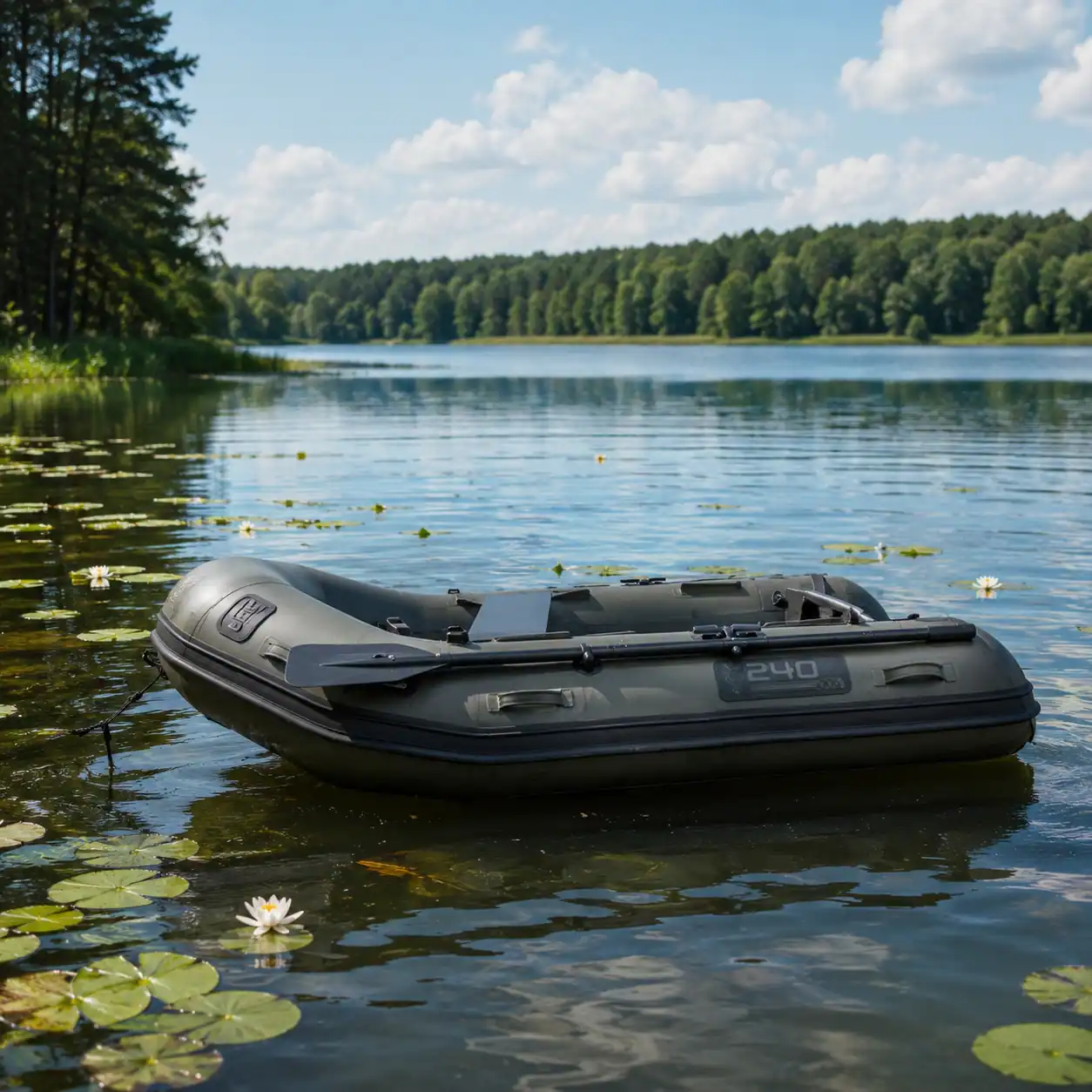
Float Tube – Drawbacks and Limitations
The float tube offers huge possibilities but is more demanding. First, it needs more space for transport. You have to bring the tube itself, motor, battery, pump, oars, often a fish finder, and safety gear.
Setup time is longer. Inflating or unloading the tube, mounting equipment, and preparing it for water takes more time than getting a bait boat ready. After a session, you must reverse the process.
The float tube also requires more experience. Float tube bait delivery isn’t just about paddling out and dropping the rig. You need to confidently navigate on water, assess conditions, manage line, react to wind and waves, and be cautious during the fight.
Bait Boat vs Float Tube – Comparison Table
| Criterion | Bait Boat | Float Tube |
|---|---|---|
| Ease of Use | Very high, especially for beginner and intermediate carp anglers | Lower, requires more preparation |
| Transport | Easier, less gear to carry | More demanding, requires tube, motor, battery, and gear |
| Setup Time | Short | Longer |
| Delivery Precision | Good, especially with GPS and fish finder | Very good, depends on angler’s experience |
| Bottom Probing | Possible with fish finder | Very precise, especially with a quality fish finder |
| Commercial Fisheries | Very good for most simpler waters | Useful mainly on more technical waters |
| Waters with Many Snags | Limited options after a bite | Best choice |
| Ability to Get Close to Fish During Fight | No | Yes |
| Fishing Beyond Islands | Highly limited | Possible |
| Experience Level | Easier for less experienced | Requires more skill |
| Fishery Regulations | Often allowed where float tubes are banned | Increasingly restricted on selected fisheries |
| Best Use | Convenient and precise rig delivery | Technically challenging fisheries and large waters |
What to Choose for Commercial Fisheries?
On many commercial fisheries, a bait boat will be the best and most convenient choice. This especially applies to waters without many snags, clear bottoms, and places where fish can be safely played from the bank.
For a beginner carp angler, the bait boat offers several big advantages. It’s simpler to use, requires less experience than a float tube, and lets you quickly start fishing. You can precisely deliver rigs and bait and repeat deliveries to the same spot, especially if your model has GPS.
It’s always worth checking the fishery’s rules. Increasingly, owners prohibit rig delivery by float tube but allow bait boats. This is another argument in favor of the bait boat, especially for those mainly fishing commercial waters.
There are exceptions. Some commercial fisheries are technically demanding, full of snags, or require float tubes for fish welfare. In such places, the owner may even recommend or require a float tube so you can get close to fish if needed.
What to Choose for Large Lakes, Reservoirs, and Wild Waters?
On large lakes, reservoirs, and wild waters, a float tube often provides greater possibilities. It allows you to better explore the fishery, probe a wider area, check bottom structure, and respond to situations arising after a bite.
If the water is technical, with lots of snags, sharp edges, submerged trees, boulders, or islands, a float tube is a safer and more versatile solution. It lets you not only position the rig but get out to the fish if the bank fight is risky.
However, if the big water isn’t technically difficult and fish can realistically be safely landed from shore, a bait boat can still be very effective. Especially if it has GPS, a fish finder, and enough range.
Bait Boat with Fish Finder or Float Tube with Fish Finder?
The comparison “bait boat with fish finder or float tube?” mainly depends on the fishery type. A float tube with a good fish finder offers the best capabilities for detailed water mapping, but a bait boat with a fish finder is a much more convenient and sufficient solution for many carp anglers.
Even mid-range bait boats today can clearly display depth and bottom structure info, allowing effective spot selection. For beginner or intermediate anglers, this is a big step toward more conscious fishing.
A float tube with a fish finder is better where very precise bottom checking, rig guiding in tough terrain, and physical control over the spot are needed. Fish finders chosen by anglers for float tubes often feature more advanced technology, providing a much better picture of the fishery. A bait boat is better where convenience, speed, and repeatable precision matter most.

Is It Worth Buying a Bait Boat Instead of a Float Tube?
In many cases, yes. Is it worth buying a bait boat instead of a float tube? If you mainly fish commercial fisheries, don’t regularly need to get out to the fish, and value ease of use, a bait boat is a very reasonable choice.
Remember, buying a float tube isn’t just the cost of the tube itself. You also need a motor, battery, fish finder, gear, more car space, and time to prepare the equipment. With a bait boat, the entry barrier is often much easier organizationally.
If you want to compare popular options chosen by other anglers, a natural next step is the ranking “Top 10 Most Popular Bait Boats in the Rockworld Store”. This kind of list complements the guide well by showing which models are most frequently picked in the Rockworld carp angler store.
Most Common Mistake When Choosing Between Bait Boat and Float Tube
The most common mistake is choosing equipment without analyzing the fisheries where you actually fish most often. The type of water should be the main criterion.
If you regularly fish commercial waters with clear bottoms, few snags, and regulations allowing bait boats, buying a float tube might be overkill. In that case, a bait boat will be simpler, more convenient, and practical.
But if you mostly fish technically difficult waters full of snags, islands, and spots requiring complicated rig handling, a bait boat alone might not be enough. In such conditions, a float tube is definitely the safer option.
The second mistake is underestimating logistics. A float tube isn’t just the tube. It also means motor, battery, fish finder, gear, car space, and extra setup time. A bait boat is much less demanding in this regard.
Bait Boat or Float Tube for a Beginner Carp Angler?
When asking “bait boat or float tube for a beginner carp angler?”, the answer usually leans toward a bait boat. Especially if fishing is mainly on commercial waters or waters without many snags.
A bait boat lets you get into bait delivery without much complication. It helps with precise rig placement, reduces the problems of long-distance casting, and you can use GPS and fish finders without investing in a full float tube setup.
A float tube is worth considering when waters are technically demanding, and there’s a real risk fish will get snagged after a bite. In those cases, a float tube isn’t just a convenient addition but often an essential tool for effective and responsible fishing.
Bait Boat or Float Tube – Final Choice
Choose a bait boat if you mainly fish commercial venues, want convenient rig delivery, prioritize quick setup, and don’t want to transport lots of gear. It’s an excellent solution for carp anglers who want to fish more precisely but don’t yet need the full capabilities of a float tube.
Choose a float tube if you fish on technically challenging waters with many snags, beyond islands, near sharp edges, submerged trees, or in places where you may need to get close to the fish after a bite.
The most practical conclusion is: a float tube offers more possibilities on technical fisheries, but for most beginner and intermediate carp anglers, a bait boat will be a more convenient, simpler, and more practical choice.
FAQ – Bait Boat vs Float Tube
Is a bait boat better than a float tube?
Not always. A bait boat is better in terms of convenience, transport, and quick rig delivery. A float tube excels on technically challenging waters where you need to physically get to the spot or the hooked fish.
Can a bait boat replace a float tube?
A bait boat can’t replace a float tube in every situation. It’s great for commercial and simpler waters, but on snag-heavy waters, a float tube remains indispensable.
What’s better to buy at first – a bait boat or a float tube?
For most beginner carp anglers, a bait boat is a better first choice. It’s easier to use, more convenient to transport, and lets you effectively deliver rigs without investing in a float tube, motor, and extra gear.
Can you probe the bottom with a bait boat?
Yes, if the bait boat is equipped with a fish finder. It then lets you check depth, bottom structure, and often fish presence. A float tube with a fish finder offers greater precision, but a bait boat will suffice for many carp anglers.
Is a bait boat with GPS a good choice for commercial fisheries?
Yes, a bait boat with GPS works very well on many commercial fisheries. It allows you to save spots, repeat deliveries, and precisely place rigs where planned.
Can you use a bait boat or float tube on every fishery?
No. Always check fishery regulations. On many waters, float tubes may be banned while bait boats allowed, or vice versa. Some fisheries have additional rules about bait delivery, boating, and fish welfare.