Blog

Bait Boat with GPS – Is It Worth Paying Extra for GPS?
A bait boat with GPS is an excellent choice for carp anglers who cast their rigs at longer distances, fish at night, use a fish finder, or want to consistently return to the same fishing spot. GPS makes it easier to precisely deliver rigs and bait, especially when the boat drifts more than 100 m from the shore, and estimating its position "by eye" becomes increasingly difficult. In this article, we explain when it’s worth paying extra for a bait boat with GPS, when a model without GPS is sufficient, and why combining GPS with a fish finder provides the greatest control over your baiting.
Table of contents
- Is it worth buying a bait boat with GPS?
- When does GPS in a bait boat make the most sense?
- From what distance does GPS in a bait boat make a difference?
- What does GPS in a bait boat provide in practice?
- Bait boat with GPS and fishfinder – is this the best combination?
- GPS or fishfinder in a bait boat – which is more important?
- Bait boat with GPS or without GPS – what to choose?
- Disadvantages and limitations of GPS in a bait boat
- When does a bait boat without GPS still make sense?
- Is it worth paying extra for a bait boat with GPS?
- Summary: bait boat with GPS – is it worth it?
- FAQ – bait boat with GPS
Is it worth buying a bait boat with GPS?
In most cases, it is worth buying a bait boat with GPS if your budget allows. This solution is especially useful for carp anglers who regularly fish with bait boats and want to precisely place their rig in a chosen spot.
GPS allows you to save a spot on the fishing ground and return to it with subsequent casts. This way, you can place your rig and bait in the exact same area instead of steering the boat "by eye" every time. This is particularly important when fish feed very specifically, stay close to certain bottom structures, or don’t want to leave obstacles.
In practice, a GPS bait boat provides the greatest advantage in four situations:
- when casting at longer distances,
- when fishing at night, in fog, rain, or waves,
- on open water without distinctive landmarks,
- when repeatedly baiting and returning to a spot found with a fishfinder.
This does not mean that every bait boat without GPS is a bad choice. For short distances, good visibility, and simple conditions, a regular bait boat can still do the job. The difference appears when accuracy, repeatability, and comfort of operation start to matter.
If you are just comparing available bait boats, it’s worth paying attention not only to bait chamber capacity, range, or battery life but also to the presence of GPS, fishfinder, and automatic return-to-shore functions.
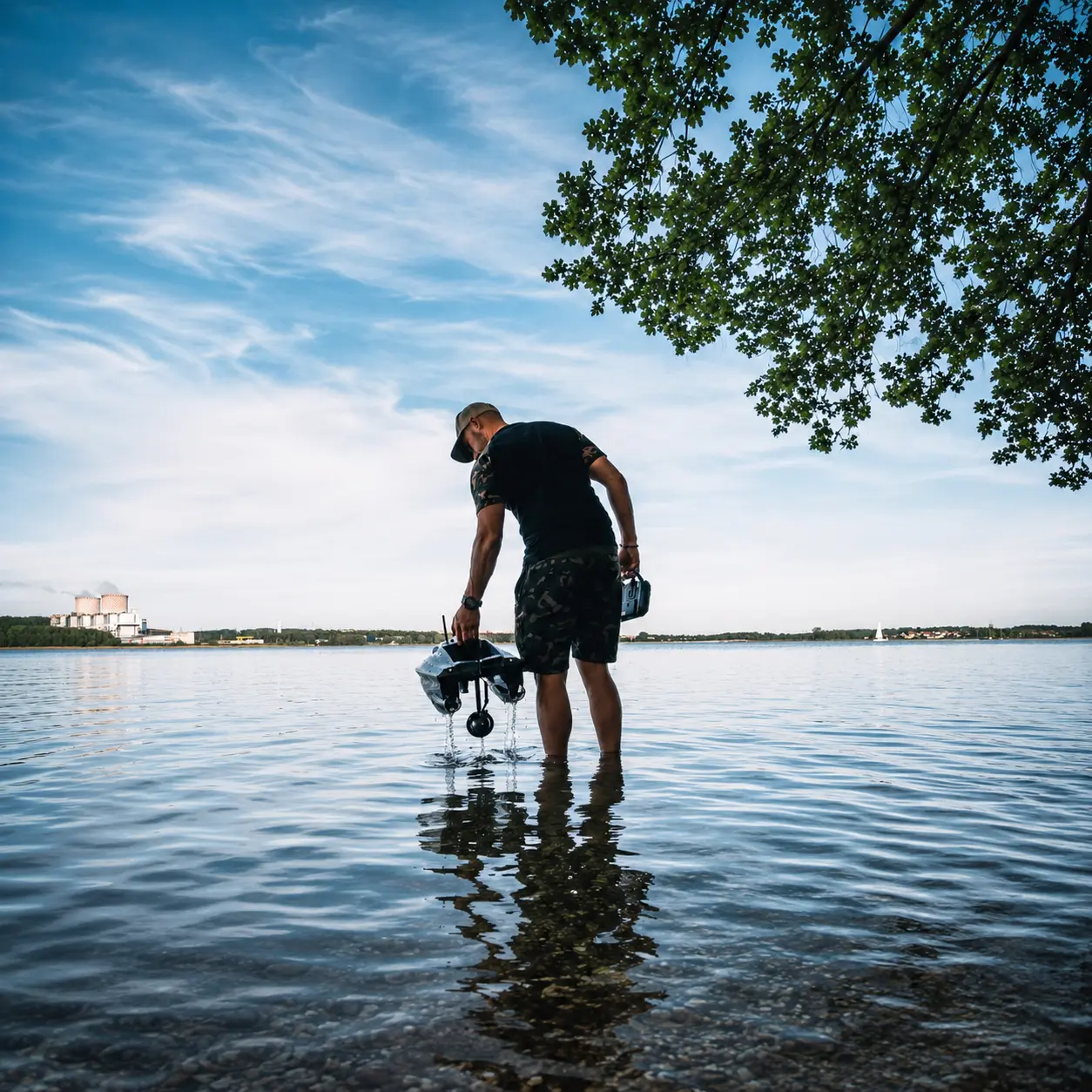
On large, open waters, GPS in a bait boat allows you to precisely and repeatedly deliver your rig at long distances, even when it’s hard to judge the boat’s exact position from the shore.
When does GPS in a bait boat make the most sense?
GPS in a bait boat makes the most sense on large waters, during long-distance casts, and where there are no clear landmarks on the surface. Open water looks very similar from the shore, so without GPS it’s hard to return to exactly the same spot.
The most practical uses of GPS are:
- casting rigs beyond 100 m,
- fishing on open water without reeds, islands, markers, or other reference points,
- repeated baiting of one spot,
- returning to a spot previously found with a fishfinder,
- casting after dark or in low visibility,
- fishing in wind, waves, and changing weather conditions.
If you are still choosing your first model and want to analyze bait boat parameters more broadly, check out the guide on which bait boat to choose so you won’t regret your purchase.
From what distance does GPS in a bait boat make a difference?
GPS starts making a real difference at distances above about 100 m. At such distances, it becomes increasingly difficult to accurately judge from the shore whether the boat is where it should be. The farther the boat goes, the worse the perception of its position relative to the fishing spot.
At 50–70 m and good visibility, an experienced carp angler can often manage without GPS. At 100–150 m, GPS clearly improves control over the cast. At 200–300 m and beyond, it becomes very important if you want precise rig placement.
When casting nearly half a kilometer, the boat becomes a small dot on the water from the shore. Then it’s hard to talk about precise rig placement without support from GPS, fishfinder, markers, or very good landmarks.
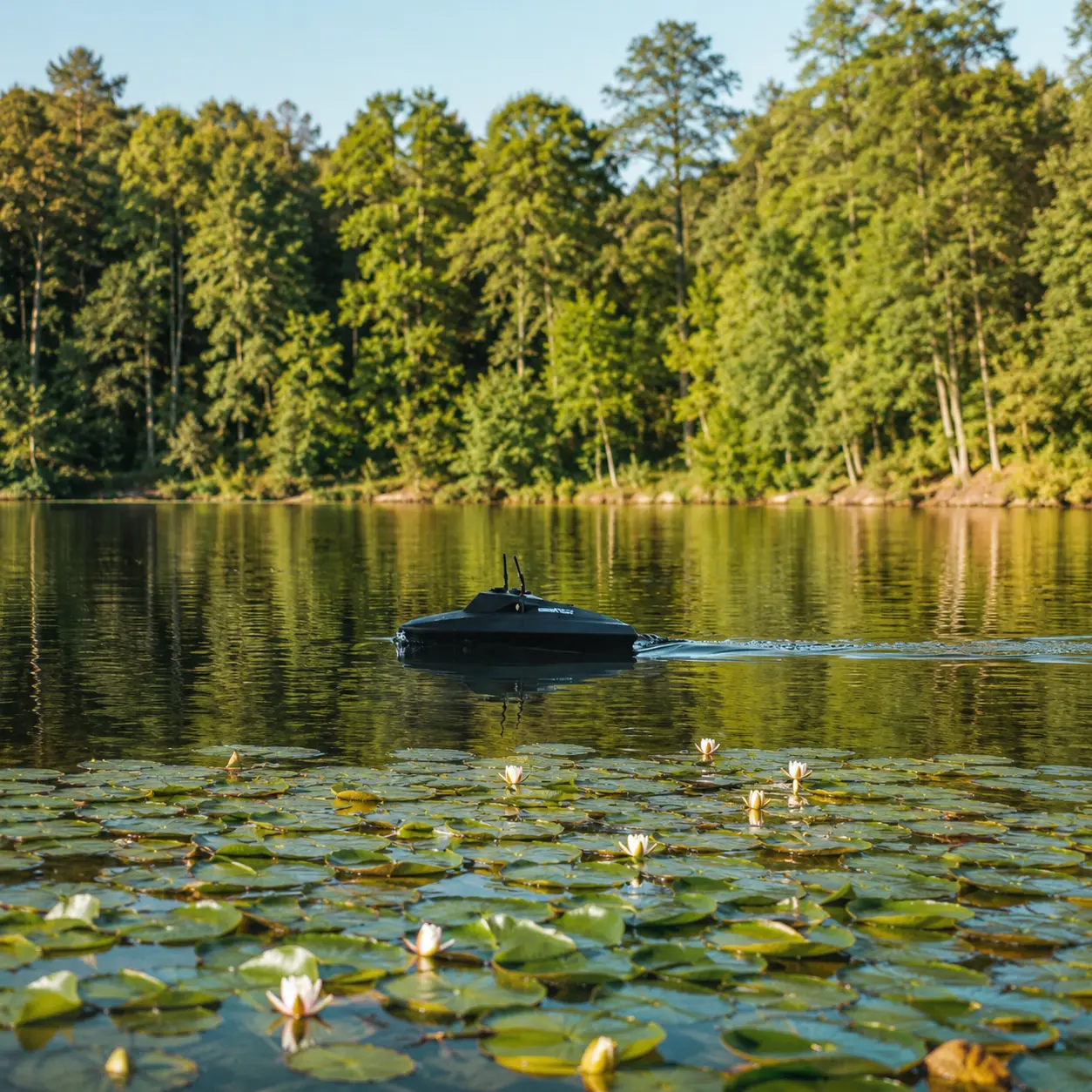
A bait boat sailing near water lilies clearly shows how important casting precision is. With vegetation 100 m or more from the shore, GPS helps repeatedly place the rig in the chosen spot.
What does GPS in a bait boat provide in practice?
GPS in a bait boat primarily gives greater control over where the rig and bait land. It’s not just about convenience. In many situations, a meter of difference can decide whether a bite happens or the rig ends up outside the most effective zone.
Precise casting of rig and bait
The biggest advantage of GPS is the ability to save points and repeatedly return to the same spot. This is important when fishing near water lilies, submerged trees, branches, drop-offs, hard bottoms, humps, or vegetation edges.
Repeatable baiting of one spot
GPS helps not only with casting the rig but also with baiting. If the spot is well chosen, you can systematically deliver bait to the same area and build a feeding point.
Fishing at night and in low visibility
After dark, steering a boat without GPS becomes very difficult. You can use strong flashlights or line markers, but at longer distances accuracy is still limited. GPS allows sending the boat to a saved point even when visibility is poor.
Return Home – automatic boat return
The automatic return-to-shore function is one of the most important GPS advantages. After dropping the rig, the boat can return to the starting point on its own, while the angler sets up the rod on rests, tightens the line, or prepares the next rig. It’s not a huge time saver but a big convenience and comfort booster.
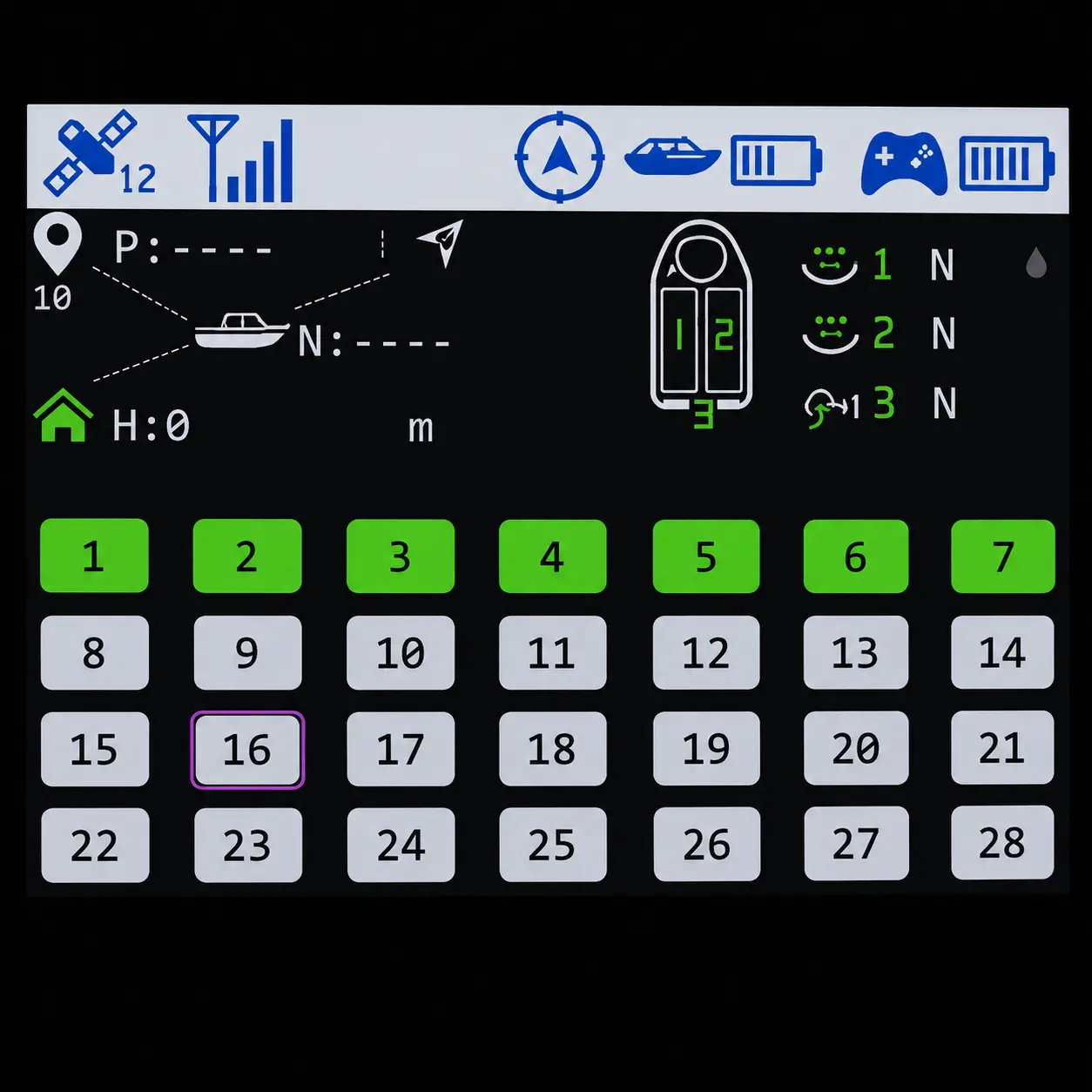
The GPS interface on the bait boat’s remote allows saving multiple points on the fishing ground, so you can quickly return to chosen spots with a few clicks.
Bait boat with GPS and fishfinder – is this the best combination?
Yes, bait boats with GPS and fishfinder offer the greatest possibilities because they combine bottom mapping with precise return to saved spots. The fishfinder shows what’s under the water, and GPS allows returning exactly to the spot considered promising.
This combination makes the most sense when you’re looking for:
- a hard bottom on soft ground,
- a drop-off or ledge,
- a hump,
- a ditch,
- a vegetation strip,
- a submerged tree,
- a transition from mud to harder bottom.
A fishfinder alone without GPS helps find interesting spots but doesn’t always make it easy to return to them. If the fishing ground has distinctive features like a characteristic ledge, submerged tree, or visible vegetation boundary, repeatability can be easier. On flat, open water, GPS is very important because it lets you save a point and return to it without guessing.
GPS or fishfinder in a bait boat – which is more important?
If you have to choose only one solution, many carp anglers would first choose a fishfinder because it shows what’s under the water. Without bottom knowledge, it’s hard to consciously select a spot to place the rig.
GPS, however, serves a different purpose: it allows you to return exactly where the fishfinder showed a good spot. That’s why the best effect comes from combining both systems. The fishfinder helps find the spot, and GPS lets you use that spot in subsequent casts.
In practice, it’s simple: first, a boat with a fishfinder helps find bottom structure, then GPS allows saving that spot and repeatedly casting the rig and bait there.
Bait boat with GPS or without GPS – what to choose?
| Criterion | Bait boat with GPS | Bait boat without GPS |
|---|---|---|
| Short distance up to approx. 50–70 m | Useful mainly for convenience, especially at night. | Usually sufficient with good visibility. |
| Distance over 100 m | Starts making a real difference in casting precision. | Harder to judge boat position from the shore. |
| Distance 200–300 m and more | Very big advantage of GPS, especially for repeatable fishing. | Precise casting becomes very difficult. |
| Fishing at night or in fog | Makes reaching the spot and boat return easier. | Casting is much harder and less accurate. |
| Wind, rain, and waves | Helps control course and reduces accidental deviations. | Manual steering is harder and less repeatable. |
| Open water without landmarks | Allows saving a point and returning to the same spot. | Hard to repeatedly hit the chosen area. |
| Baiting the same spot | Very big advantage thanks to saved GPS points. | Repeatability depends on experience and conditions. |
| Fishfinder | The best effect comes from combining GPS with fishfinder. | Fishfinder alone helps find spots but harder to return to them. |
| Automatic return | Return Home function increases convenience and safety. | Return requires manual steering. |
| Best choice for | Carp anglers fishing farther, at night, on large and open waters. | Carp anglers fishing close to shore, during the day, with good visibility. |
Conclusion: a bait boat without GPS may suffice for short distances, daytime, and good visibility. However, if you cast beyond 100 m, fish at night, on open water, or in spots found with a fishfinder, a bait boat with GPS provides much greater control, precision, and repeatability.
If you want to explore bait delivery methods more broadly, check out the comparison of bait boat or pontoon, as the choice depends on the fishing ground, distance, and fishing style.
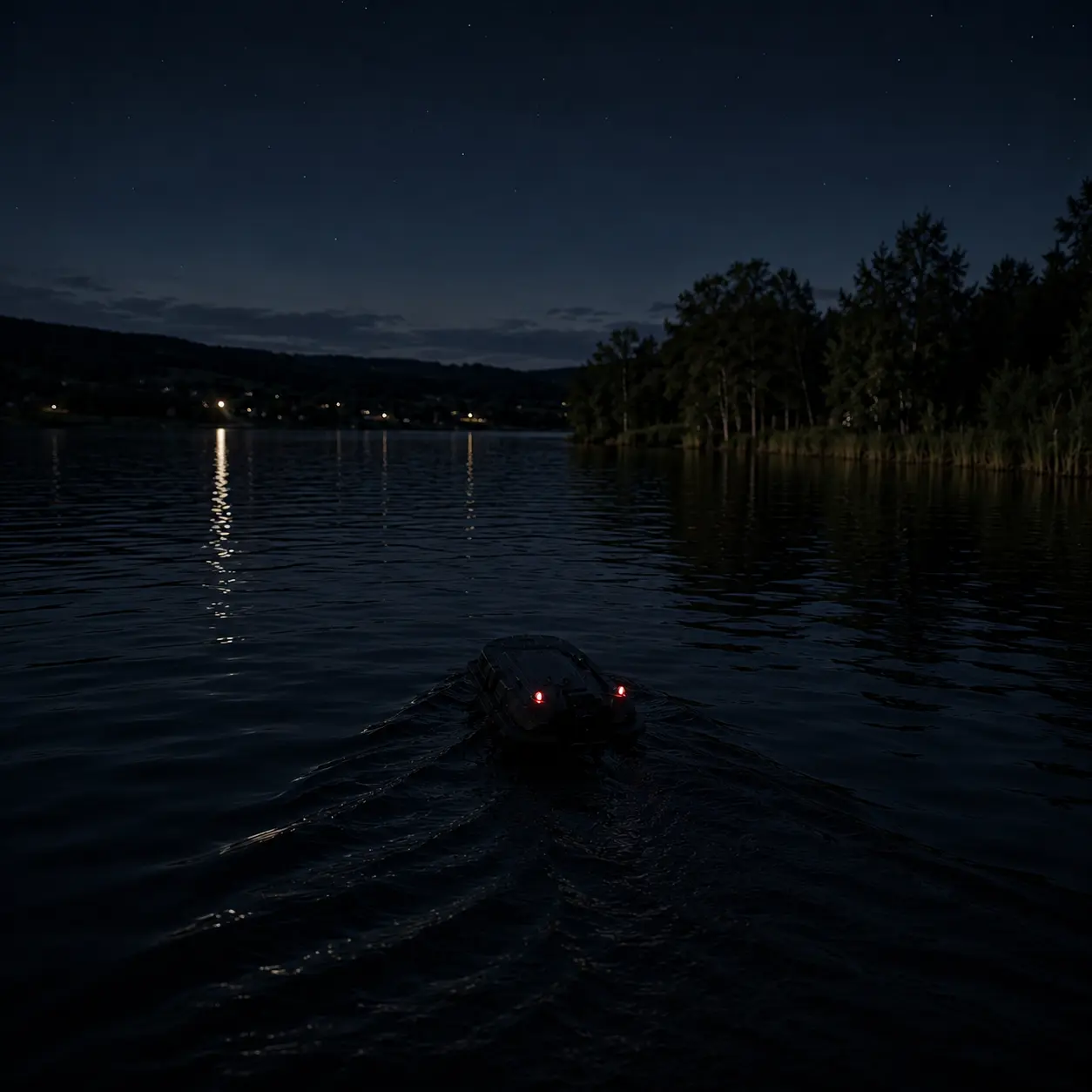
A bait boat sailing at night shows one of the biggest GPS advantages — the ability to precisely cast the rig even when the boat’s visibility from the shore is very limited.
Disadvantages and limitations of GPS in a bait boat
GPS in a bait boat has many advantages but is not without limitations. The most important thing before purchase is simple: not every GPS works with the same accuracy.
In a good bait boat, GPS can very precisely bring the boat to the saved point. In weaker systems, the deviation can be several meters. Therefore, it’s not enough to look only at the fact that the boat has GPS. The quality of the system, connection stability with satellites, navigation accuracy, and Return Home function performance matter.
The main GPS limitations are:
- weak systems may have larger deviation from the saved point,
- GPS does not detect obstacles such as piers, islands, reeds, branches, or other anglers’ lines,
- in wind and waves, the boat may correct its course and move in a slight zigzag,
- the Home point should be set in a safe place,
- it’s advisable to test GPS on a short distance before a long cast.
A common mistake of beginners is trusting the autopilot too much without prior testing. It’s best to first test the boat close to shore, check saving the Home point, response to commands, return accuracy, and behavior in light wind.
When does a bait boat without GPS still make sense?
A bait boat without GPS still makes sense if you fish at short distances, during the day, in good weather, and on waters where it’s easy to control the boat’s position. This applies especially to small waters, simple spots, and situations where the rig is cast near a clearly visible landmark.
The lack of GPS will be less noticeable when:
- you cast rigs at short distances,
- you mainly fish during the day,
- conditions are calm,
- there are clear landmarks on the water,
- you don’t need to return exactly to the same spot,
- you don’t fish regularly on large, open waters.
At night, even at shorter distances, GPS can be very useful. After dark, judging the boat’s position becomes harder, and steering "by eye" quickly loses accuracy.
Is it worth paying extra for a bait boat with GPS?
If your budget allows, it’s better to buy a bait boat with GPS right away. This solution increases comfort, safety, and effectiveness of casting. Especially if you fish beyond 100 m, often cast rigs at night, or want to return to spots found with a fishfinder.
GPS doesn’t replace thinking at the water or observing the boat’s route. However, it gives a big advantage where manual steering becomes imprecise. That’s why for many carp anglers, a bait boat with GPS is not just an accessory but one of the most important pieces of gear.
If after this analysis you know GPS will be an important part of your gear, a good next step is to check the best bait boats 2026 comparison, where we discuss specific models worth considering.
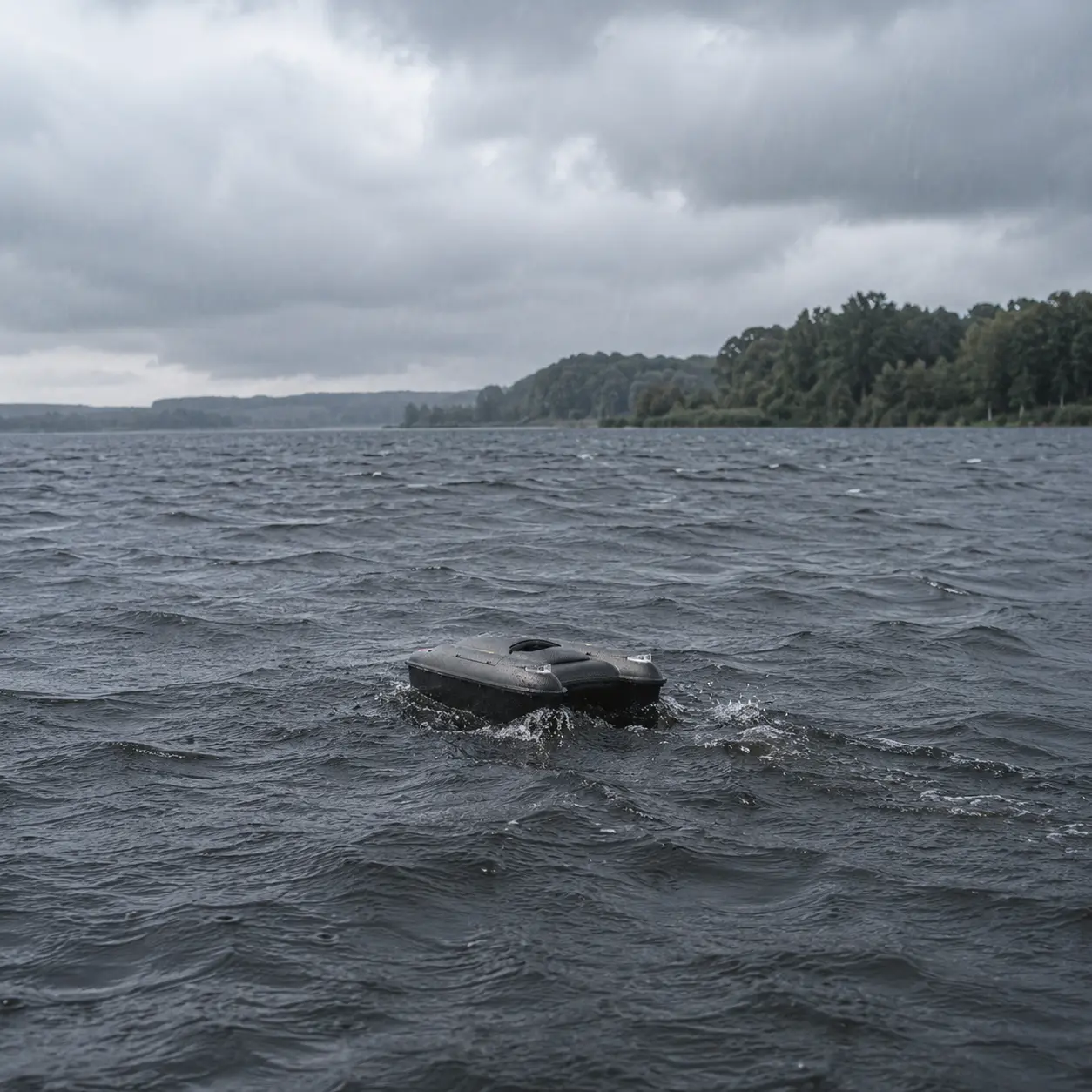
A bait boat with GPS on a rainy and windy day provides greater control over casting because the system helps maintain course and reach the saved point despite difficult conditions.
Summary: bait boat with GPS – is it worth it?
A bait boat with GPS definitely makes sense if you value precision, repeatability, and greater control over casting. It offers the biggest advantage at distances over 100 m, on large waters, after dark, in fog, wind, waves, and on open water without landmarks.
A boat without GPS may suffice for simple fishing at short distances, but its capabilities quickly end when you need to regularly hit the same spot. That’s why GPS should be seen not as an unnecessary price-increasing add-on but as a practical tool that significantly improves the quality and effectiveness of bait boat fishing.